Home / Rehabilitation After Meniscus Repair
Meniscus repair rehabilitation Warsaw
Rehabilitation after meniscus repair under the care of a physiotherapist: from exercise before the procedure to a return to activity. We choose exercises for the stage of meniscus healing and your treating doctor’s recommendations.
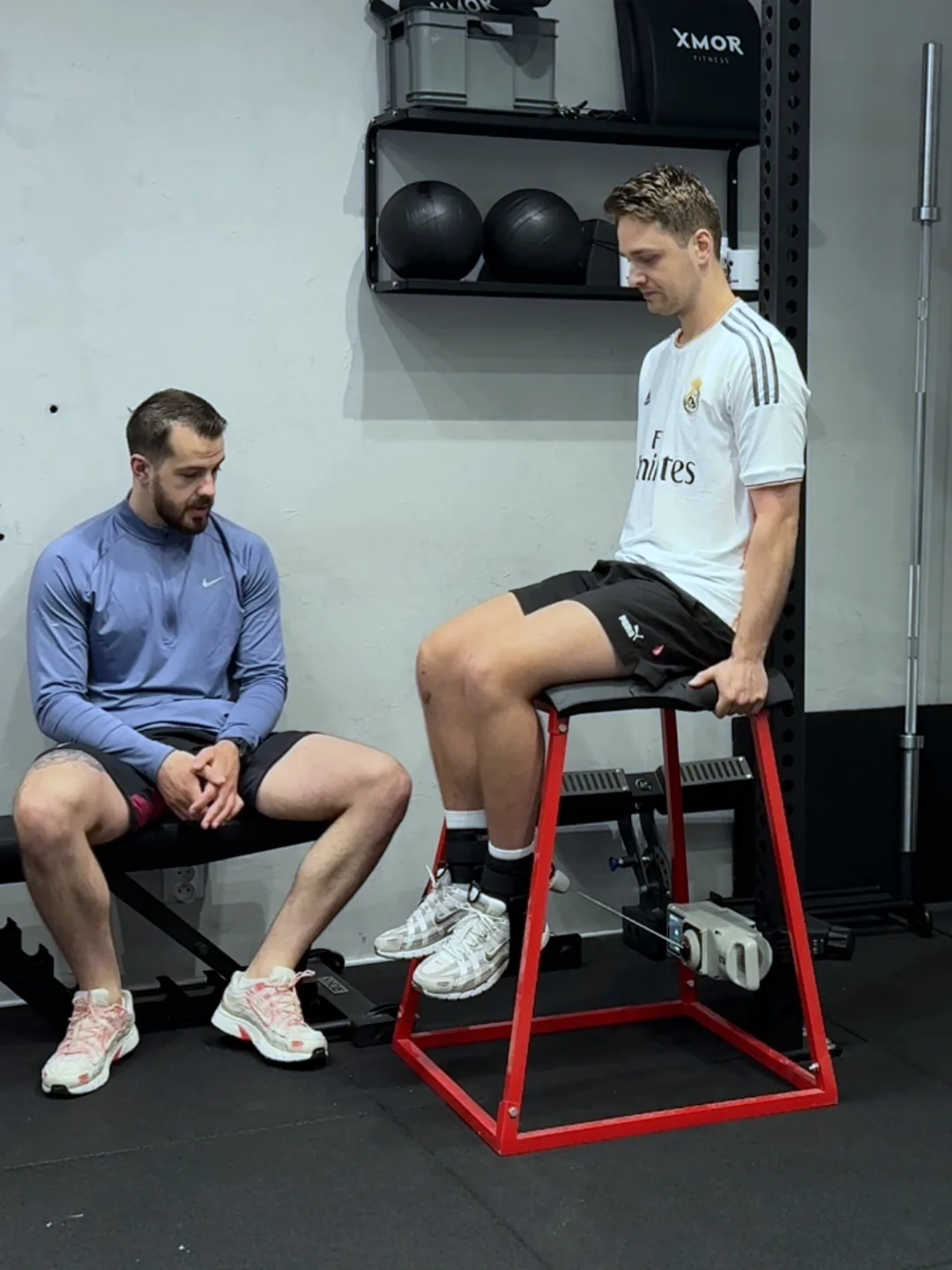
What patients come with
When to start rehabilitation after meniscus repair
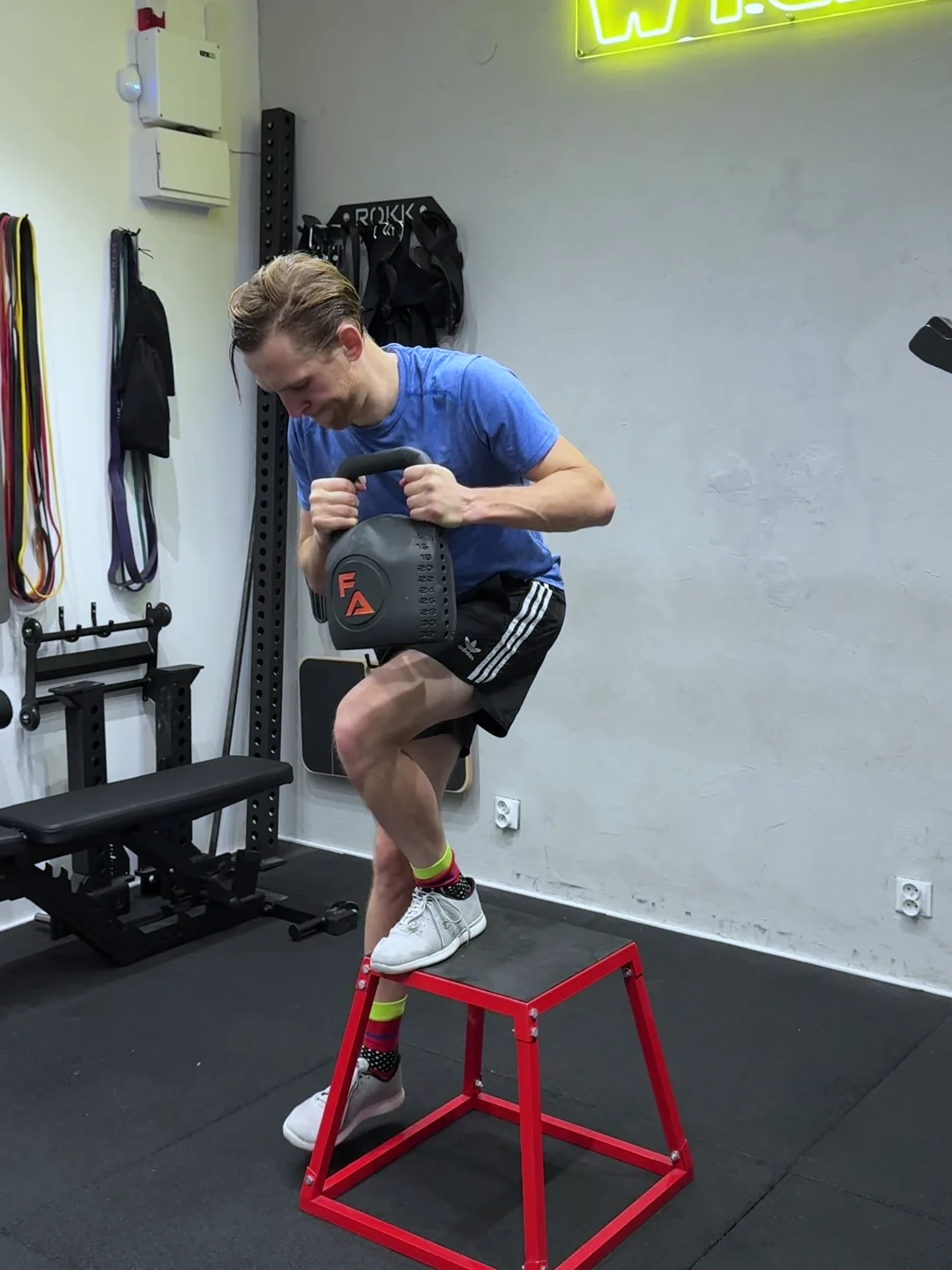
Before surgery
Exercise before the procedure strengthens the leg muscles and helps prepare the knee for surgery. We also teach walking on crutches, which usually makes the start after the procedure easier.
Right after surgery
We start with gentle exercises that do not load the freshly sutured meniscus, in line with your treating doctor’s recommendations. We adapt the plan to how healing progresses.
A few weeks or months later
If a few weeks have already passed since surgery, it is still a good moment. We start from where you are now and adapt the plan to what your knee can do at present.
What a visit looks like
What rehabilitation after meniscus repair looks like
- STEP 01
Diagnosis
An interview about how the injury happened, the surgery and your sporting goals. We assess range of motion, swelling, strength and knee control.
- STEP 02
Individual plan
We choose exercises for your stage after surgery and your sport. We adjust the plan as we go to how the knee responds, for example to swelling the next day.
- STEP 03
Regular sessions
Therapeutic exercise and strength training that get harder as the knee becomes more capable.
- STEP 04
Tests before the next stage
We regularly repeat strength and symmetry tests. You start the next stage when the test results allow it, not because a certain week has passed.
Reviews
What patients say after meniscus repair
Zaczęliśmy współpracę zaraz po szyciu łąkotki, od pierwszego tygodnia rehab, a potem intensywne ćwiczenia, które szybko postawiły mnie na nogi.
Wróciłam do pełnej sprawności, mobilności i ukochanego brazylijskiego jiu-jitsu.
Gosia Haneczok★★★★★
Rehabilitation after meniscus repair
Początek współpracy był 3 m-ce po rekonstrukcji ACL i szyciu łąkotki w jednej nodze, dodatkowo 10 m-cy wcześniej była rekonstrukcja ACL i szycie łąkotki w drugiej.
Więc było co naprawiać, bo mięśni i siły prawie nic, był za to strach przed chodzeniem oraz ból na schodach. I teraz jest odwrotnie. Mięśnie i siła są, a bólu i strachu nie ma.
Monika Anna Stobiecka★★★★★
Rehabilitation after ACL reconstruction and meniscus repair
See all reviews on Google and Booksy (150+ reviews, average 5.0)
Price
How much does rehabilitation after meniscus repair cost
260 PLN
Single visit
60 minutes. The first visit includes an interview, a review of your test results and an assessment of strength and movement patterns.
240 PLN
In a package of 4 visits
960 PLN per package. Good at the start of rehabilitation, when you need several weeks of regular work. Includes a body composition analysis worth 240 PLN.
220 PLN
In a package of 8 visits
1,760 PLN per package. Includes force plate tests and a body composition analysis worth 735 PLN in total.
Studio
Rehabilitation after meniscus repair in Praga-Południe
The studio is at Zamoyskiego 49, with the entrance from the Grochowska side. From Warszawa Wschodnia station it is about a 5-minute walk. Parking is about 50 m from the studio.
The same physiotherapist guides you from therapeutic exercise all the way to full loads.
Show on map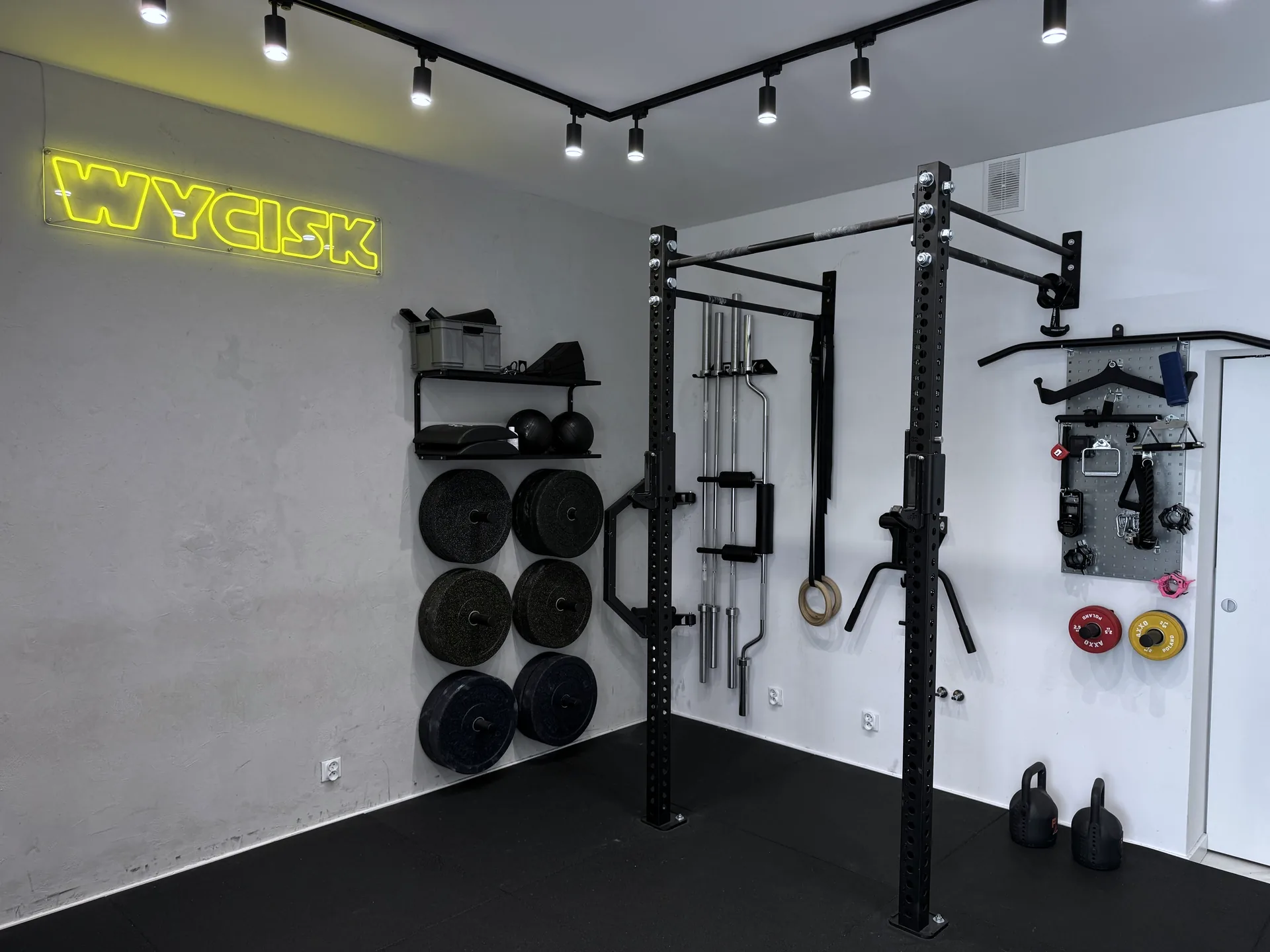
FAQ
Frequently asked questions about rehabilitation after meniscus repair
Patients waiting for meniscus surgery often have many questions. Below you will find answers to the most common ones.
What are the menisci and what do they do in the knee?
The menisci are crescent-shaped structures made mainly of collagen, located between the femur and the tibia. Their main role is to increase joint stability, distribute load and improve the fit of the joint surfaces during movement. Thanks to them the knee better tolerates the forces of walking, running or jumping.
When do the menisci get damaged?
Contrary to appearances, meniscus damage is a common problem that does not affect only athletes. Anyone can be injured. The most common causes include sports injuries, degenerative changes, direct trauma (for example a blow to the knee) and long-term or repeated overload of the knee joint.
What are the symptoms of a damaged meniscus?
How can you tell the meniscus may be damaged? The most common signs are: knee pain that worsens with activity, especially when bending and straightening the leg, swelling caused by fluid in the joint, difficulty bending and straightening the knee, and a feeling of the joint locking or catching.
What does meniscus repair involve?
When a meniscus is seriously damaged, surgery is sometimes necessary. Depending on the type and location of the injury, different techniques are used: arthroscopy, meniscectomy, suturing or transplant. Sometimes a piece of meniscus that cannot be repaired has to be removed. If you have had any of these procedures, get in touch. We deliver rehabilitation after knee arthroscopy in Warsaw, as well as after suturing or transplant.
What should you do after knee surgery?
After knee surgery the most important thing is to follow the recommendations of your doctor and physiotherapist and to exercise regularly. In the first weeks you should return to activity gradually and avoid overloading the joint.
What should you avoid after knee surgery?
Avoid kneeling, sitting on low seats and crossing your legs, as this increases the load on the joint. Overloading the knee, standing for long periods or driving without your doctor’s consent is also not advisable. Any increasing pain, swelling or worrying symptom is worth discussing with a specialist straight away.
Why is post-operative knee physiotherapy important?
The surgeon repairs the structures, but it is rehabilitation that makes them work properly again. Without it, muscles can weaken, range of motion can decrease and the risk of complications can rise. Usually, the sooner you start exercising after leaving hospital, in line with your doctor’s recommendations, the easier it is to regain function. We create every plan individually, based on the type of procedure, your health and your goals.
Read more about how we work
Rehabilitation after meniscus repair: how we work
Rehabilitation before surgery for a damaged meniscus
Before you end up on the operating table, it is worth preparing the knee for what lies ahead. Well-run pre-operative rehabilitation can influence how quickly you regain function afterwards.
What does it involve? Mainly strengthening exercises for the lower limb muscles: the stronger they are before the operation, the easier they take over the load afterwards. You will also learn to walk with crutches and, if the knee allows, we will work towards a full, symmetrical range of motion.
Post-operative rehabilitation
Once the meniscus repair is done, rehabilitation begins. Properly delivered physiotherapy is matched to the patient’s individual needs and abilities. What do we focus on? Regaining full knee range of motion, rebuilding muscle strength and restoring stability of the lower limb.
We divide the whole process into four stages. Each of them is briefly described below. The weeks given are approximate and depend on your doctor’s recommendations and the course of healing.
Early post-operative period, approximately weeks 1-2
The first two weeks after the procedure are usually a time for the PRICE principle. What does this mean in practice? You protect the operated leg (walking on crutches), give yourself time to rest, cool the knee with ice after each exercise session, use compression (a bandage or brace) and keep the leg raised high to reduce swelling. Exercises after meniscus repair in this period are gentle: we focus on mobility exercises and isometric exercises that do not load the freshly sutured tissue.
Initial loading period, approximately weeks 3-6
Over the following weeks you continue the exercises from the previous stage, but new elements are added: muscle strength exercises in an unloaded position and gait training with simulated loading of the limb.
Return of function period, approximately weeks 7-12
This is when we introduce endurance training. We intensify the existing exercises, you learn to walk with full weight on the leg and start riding a stationary bike. The goal? Full knee flexion and extension.
Gradual return to activity period, approximately weeks 13-16
The final stage is dynamic and resistance exercise and, if you play a sport, movements specific to it. You gradually return to recreational and sporting activity.
How long does full rehabilitation after meniscus repair take?
The meniscus needs time to heal. The pace of healing depends on several factors: the extent of the damage, the surgical technique used and your general health. As a rough guide, the tissue unites between weeks 6 and 12, but a full return to sport can take 4 to 6 months.
Meniscus repair
After suturing, the meniscus needs time to heal, so the first weeks are isometric exercises and gentle mobility work, without forcing the knee. In later stages we gradually introduce resistance exercises, plyometric training and learning correct movement patterns. We adapt everything to the pace of your healing.
Why choose our physiotherapists for meniscus repair rehabilitation in Warsaw?
Whether we lead physiotherapy after meniscus repair, arthroscopy or ACL rehabilitation in Warsaw, we always rely on proven methods. We make no unrealistic promises, we do not use manual therapy and we do not recommend trendy gadgets from social media. We build on experience and the pillars of physiotherapy: well-chosen exercise, pain management and gradual load building.
What else do you gain by choosing knee physiotherapy in Warsaw with us? A plan made specifically for you, matched to your goals and abilities. Every visit is a concrete step forward, not a random set of exercises.
Written by Jerzy Wycisk, MSc, physiotherapist (PWZFz 78471). Updated: 5 November 2026.
Book your first visit
One hour for an interview, a functional assessment and a plan of work. We see patients at Zamoyskiego 49 in Praga-Południe.