Home / Force Plate Strength Testing in Warsaw
Force Plate Strength Testing
Force plate testing shows objectively whether your body is ready to return to sport. We measure strength, power and asymmetry more precisely than an assessment by eye allows.
Why patients come to us
When to have a force plate test
Returning to sport after an injury
We check whether you can safely return to sport after an injury and whether your strength has returned to its pre-injury level.
A drop in speed, power or strength
The test shows where the drop in performance comes from, whether you have an asymmetry between your legs and whether it should concern you.
Your knee still hurts despite rehabilitation
The results show whether there are remaining strength deficits or differences between your legs that are worth working on.
What the test looks like
What a force plate test looks like
- STEP 01
Preparation
Wear sports clothes and avoid heavy leg training the day before. Bring test results or recommendations you received after your injury.
- STEP 02
Test on the plates
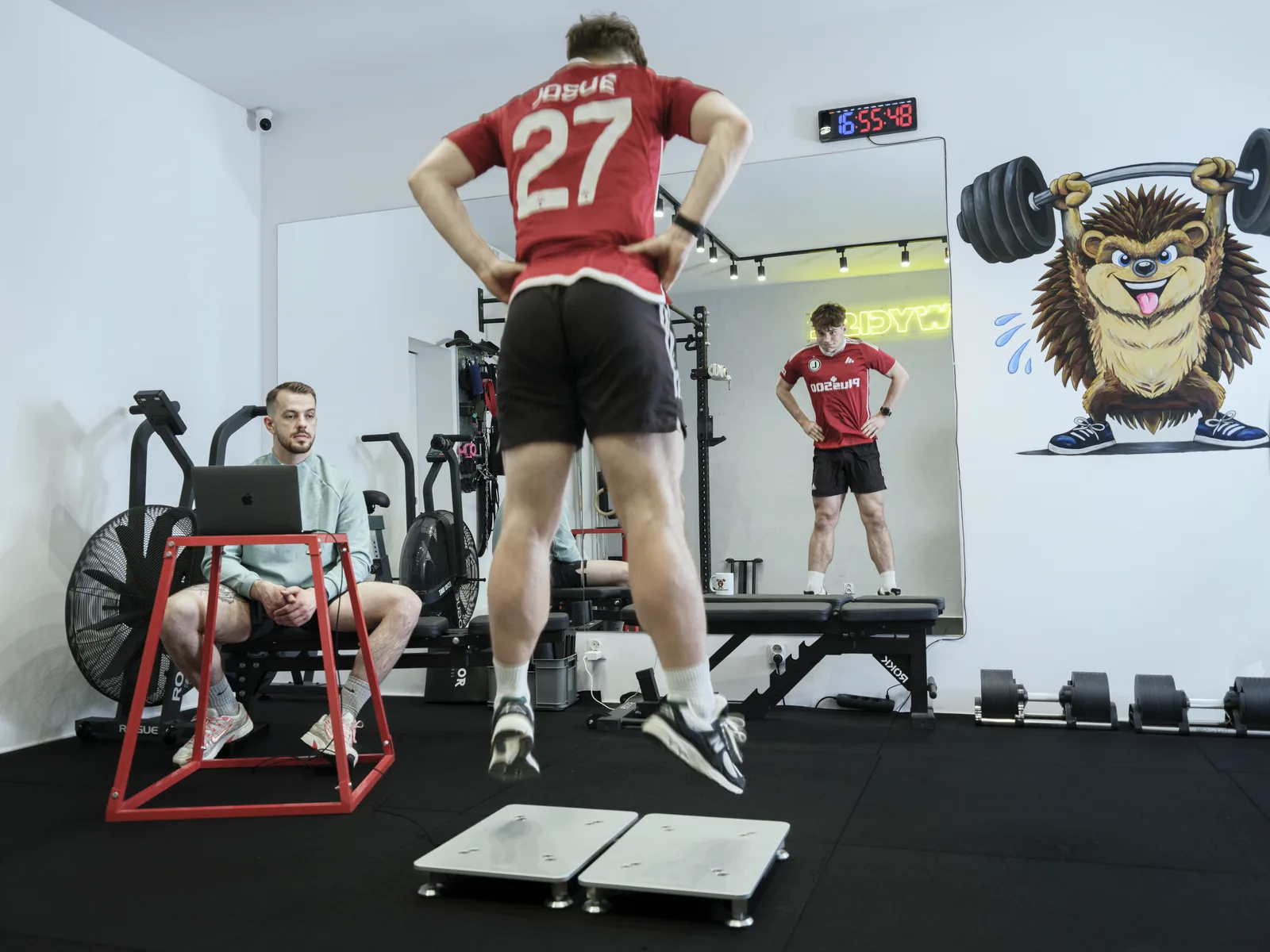
You stand on two plates and perform set tasks: jumps, squats, landings and balance tests. We choose the tests to suit your stage and symptoms.
- STEP 03
Analysis and report
We analyse the results after the tests. You receive a report with charts and an explanation.
- STEP 04
Plan and retests
You receive a clear plan, and we monitor progress with retests, most often every 3-6 weeks.
Reviews
What patients say about measurements and tests
Co ważne, gabinet wyposażony jest w nowoczesne rozwiązania i urządzenia, które na co dzień kojarzą się raczej z profesjonalnym sportem.
Dzięki nim nie działamy „na oko”, ale opieramy się na twardych danych, na bieżąco mierząc postępy i idealnie dopasowując obciążenia do aktualnych możliwości.
Rafał Kosiarski★★★★★
Rehabilitation after knee arthroscopy
Plan treningowy przygotowywany był między innymi na podstawie testów, które wspólnie robiliśmy na treningach (uważam, że kluczowe jeśli chcemy bezpiecznie wrócić do sportu).
Trafiłem do niego po trzecim już zerwaniu ACL, około szóstego miesiąca po operacji z planem powrotu do sportu. Od pierwszego treningu dało się wyczuć pełen profesjonalizm i przede wszystkim skupienie na skuteczności w metodach treningu (i przy tym luźną atmosferę). Efekty w stu procentach spełniły moje oczekiwania.
Kamil Skorzycki★★★★★
Return to sport after ACL reconstruction
See all reviews on Google and Booksy (150+ reviews, average 5.0)
Price
How much a force plate test costs
895 zł
Full option with a training plan
Extended test, in-depth analysis and a report, plus an individual exercise programme based on your results.
Studio
Force plate testing in Praga-Południe
The studio is at ul. Zamoyskiego 49, with the entrance on the Grochowska side. It is about a 5-minute walk from Warszawa Wschodnia station. Parking is about 50 m from the studio.
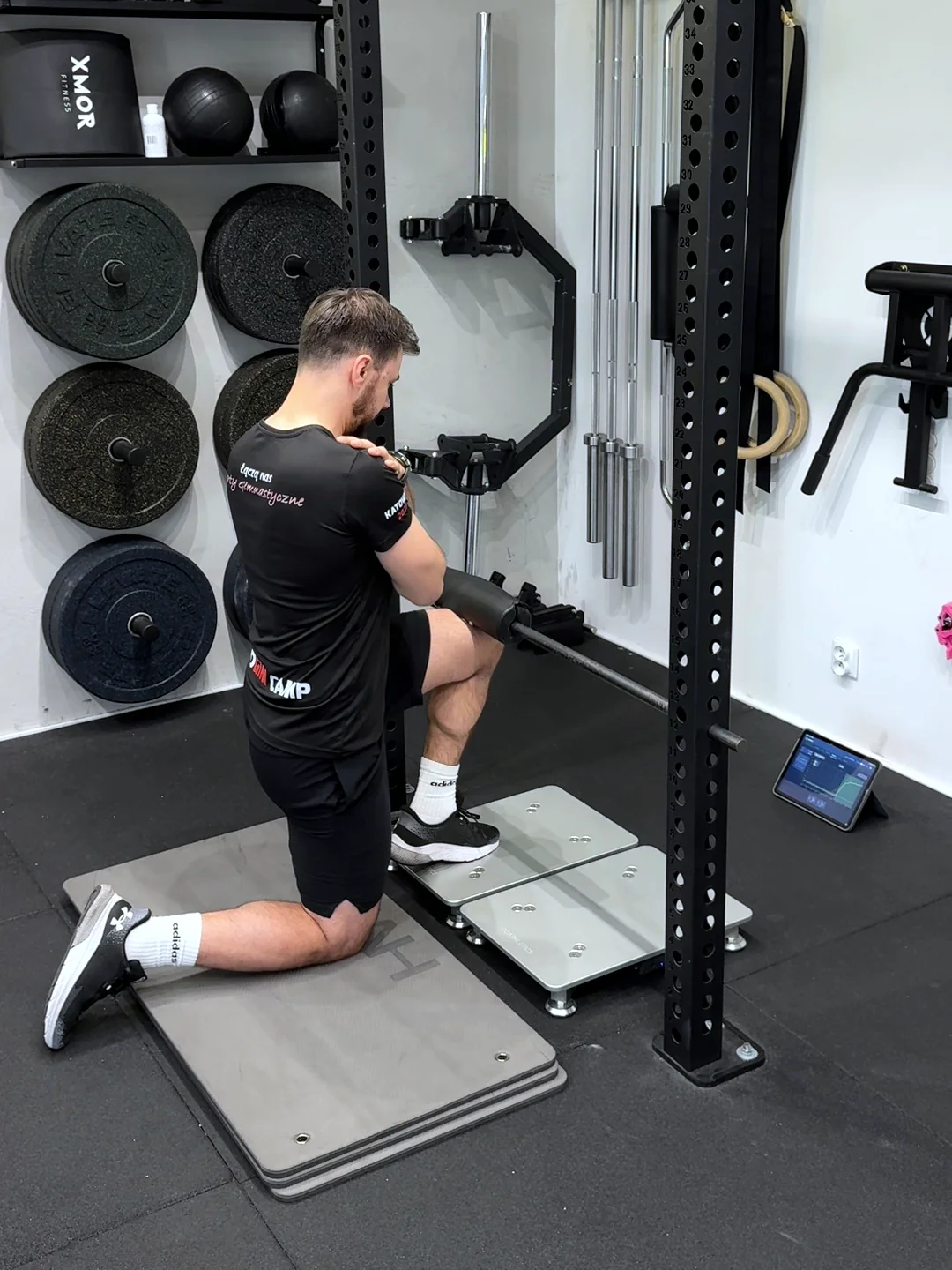
We carry out the test in the studio’s training room, on PlateMate CC Athletics force plates.
Show on map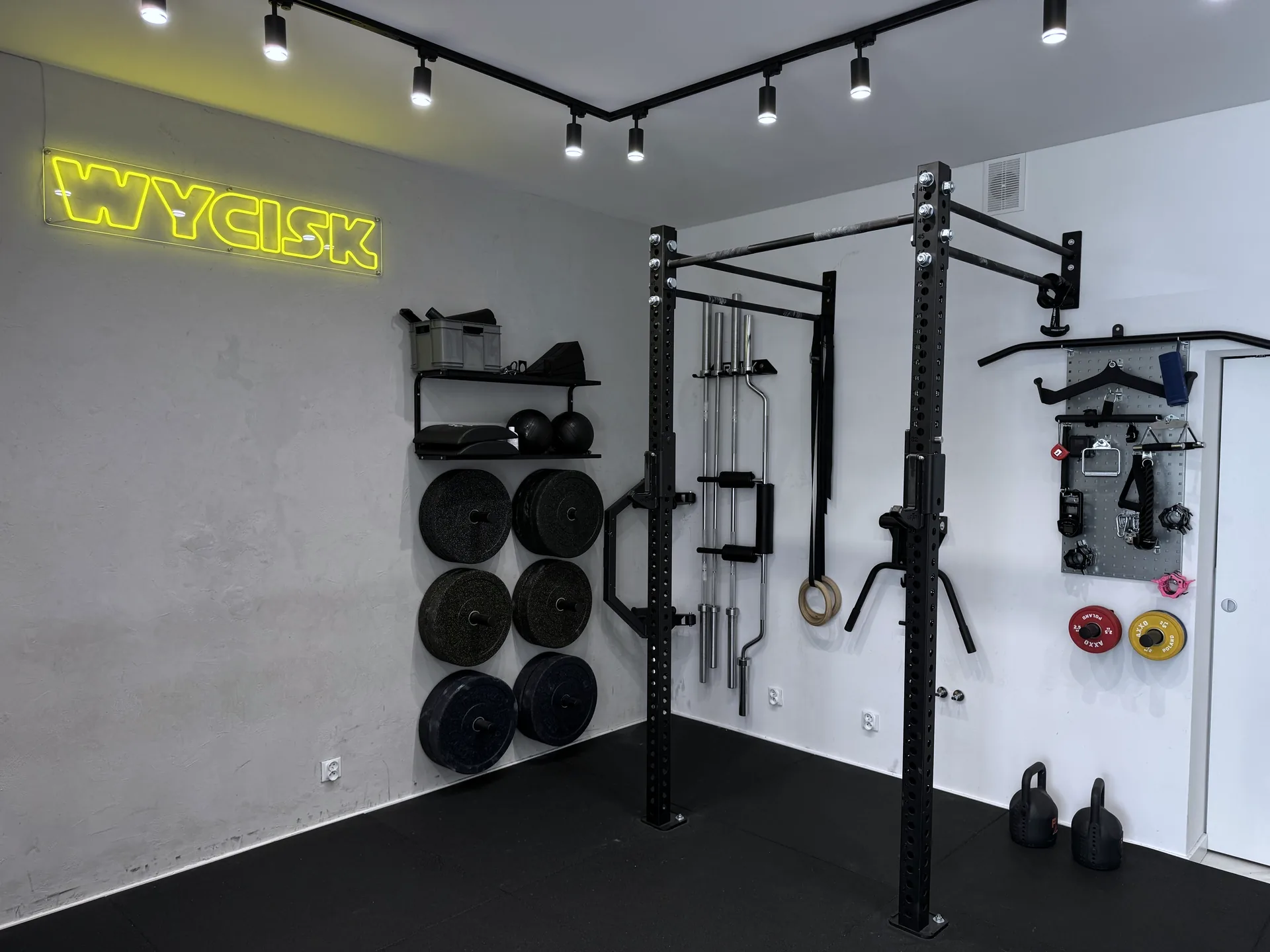
FAQ
Frequently asked questions about force plate testing
It is natural to have questions about the device and the test itself. See the answers to the questions our clients ask most often.
What is a force plate?
A force plate is a measuring device that records ground reaction forces during movement: jumps, landings, squats and balance tests. The results show how the body generates force and whether both sides work symmetrically.
What does a force plate measure?
We measure, among other things, jump height, peak force, power, impulse, braking dynamics and asymmetry between limbs. The PlateMate CC Athletics plate we use records more than 85 parameters in real time.
How do you use the force plate?
You stand on two plates and perform set tasks. The sensors measure pressure with great precision. We analyse the results after the tests, and you receive a report with charts and an explanation.
Has the accuracy of PlateMate measurements been confirmed?
Yes. A 2025 study by the University of Belgrade found more than 99% agreement between PlateMate data and AMTI force plates. A sampling frequency of 960 Hz ensures high precision for every measurement.
What can be measured on PlateMate plates apart from jumps and isometric tests?
Apart from jumps and isometric tests, the plate allows us to assess stability and balance, analyse data from single-leg and double-leg landings and measure load symmetry in the squat.
Can athletes’ progress be monitored on CC Athletics PlateMate plates?
Yes. The system allows results from successive sessions to be compared. We usually retest every 3-6 weeks, often enough to respond to changes.
Is it only for athletes?
No. The test is useful for anyone returning to activity after an injury, checking the direction of their rehabilitation or wanting to train more wisely.
Does it hurt, and is it safe after an injury?
We choose the tests to suit your stage and symptoms. If something causes discomfort, we do not do it. The patient’s safety matters more than the result.
How should I prepare for the visit?
Wear sports clothes. Avoid heavy leg training the day before. Do you have test results or recommendations from after your injury? Bring them with you.
How soon are the tests repeated?
Most often 3-6 weeks after the first test. We set the specific date at the visit; it depends on your goal and stage.
How much does a force plate test cost?
The basic option costs 495 zł, the full option 795 zł and the full option with a training plan 895 zł. In the package of 8 visits, force plate testing is included in the price.
Read more about our methods
Force plate testing: how we work
When to have a force plate test
Force plate testing shows objectively whether your body is ready to return to sport: we measure strength, power and asymmetry with a precision that clinical observation cannot provide. If after an injury you are wondering whether your knee is ready for more, or if your results have dropped and you do not know why, the test will give you specific numbers instead of guesswork. At Studio Wycisk, Physiotherapy and Training, you can have the test done and receive a report with an analysis of the results and specific recommendations.
The test is useful both for athletes and for people after surgery who want to know whether their knee is ready for more. Most often we are asked:
- whether you can safely return to sport after an injury,
- where a drop in speed, power or strength comes from,
- whether you have an asymmetry between your legs and whether it should concern you,
- why your knee still hurts despite rehabilitation,
- what exactly to do next in training.
PlateMate CC Athletics: key measurement parameters
We use PlateMate CC Athletics force plates, which precisely measure ground reaction forces. During the test you stand on two separate plates and perform movement tasks: jumps, squats, landings and balance tests. The sensors record the pressure of your feet almost a thousand times a second (960 Hz).
The plate provides more than 85 jump parameters and more than 40 isometric ones. The most important are jump height, peak force, power, impulse, braking and landing dynamics and asymmetry between limbs. You receive the results as clear charts and numbers, so you see specifics, not generalities.
The accuracy of PlateMate was confirmed by a 2025 study by the University of Belgrade: the raw data agree by more than 99% with AMTI force plates used in research laboratories.
Regain your form and return to activity with reliable measurements
After knee surgery or a longer break, the body tries to compensate for deficits on its own: the healthy leg takes over more work, the walking pattern changes and power drops on the operated side. Subjectively you may feel fine. Such compensations can become ingrained and lead to further problems or recurrent injuries.
The test shows what cannot be seen with the naked eye: whether the leg works symmetrically, how stable the landing is and whether strength has returned to its pre-injury level. This tells us when you can return to running, when to jumping and when to training specific to your sport.
After the test you receive a report and a clear plan: which muscle groups to strengthen, which loads to introduce and in what order. We monitor progress with retests, most often every 3-6 weeks.
The green light to return to sport
The force plate test is not the end but the beginning. The results become the starting point for further work: post-operative physiotherapy, personal training or athletic performance training for a specific sport. If the data show that the knee is not yet ready for running, we know what to do to get it there.
Written by: Jerzy Wycisk, MSc, physiotherapist (PWZFz 78471). Updated: 5 November 2026.
Book your first visit
A test, analysis of the results and a report with specific recommendations. We are at ul. Zamoyskiego 49 in Praga-Południe.