Home / Knee Rehabilitation in Warsaw
Knee rehabilitation Warsaw
We see people with knee injuries and overload, with or without surgery. We base the plan on a functional assessment and strength tests, not on the calendar alone.
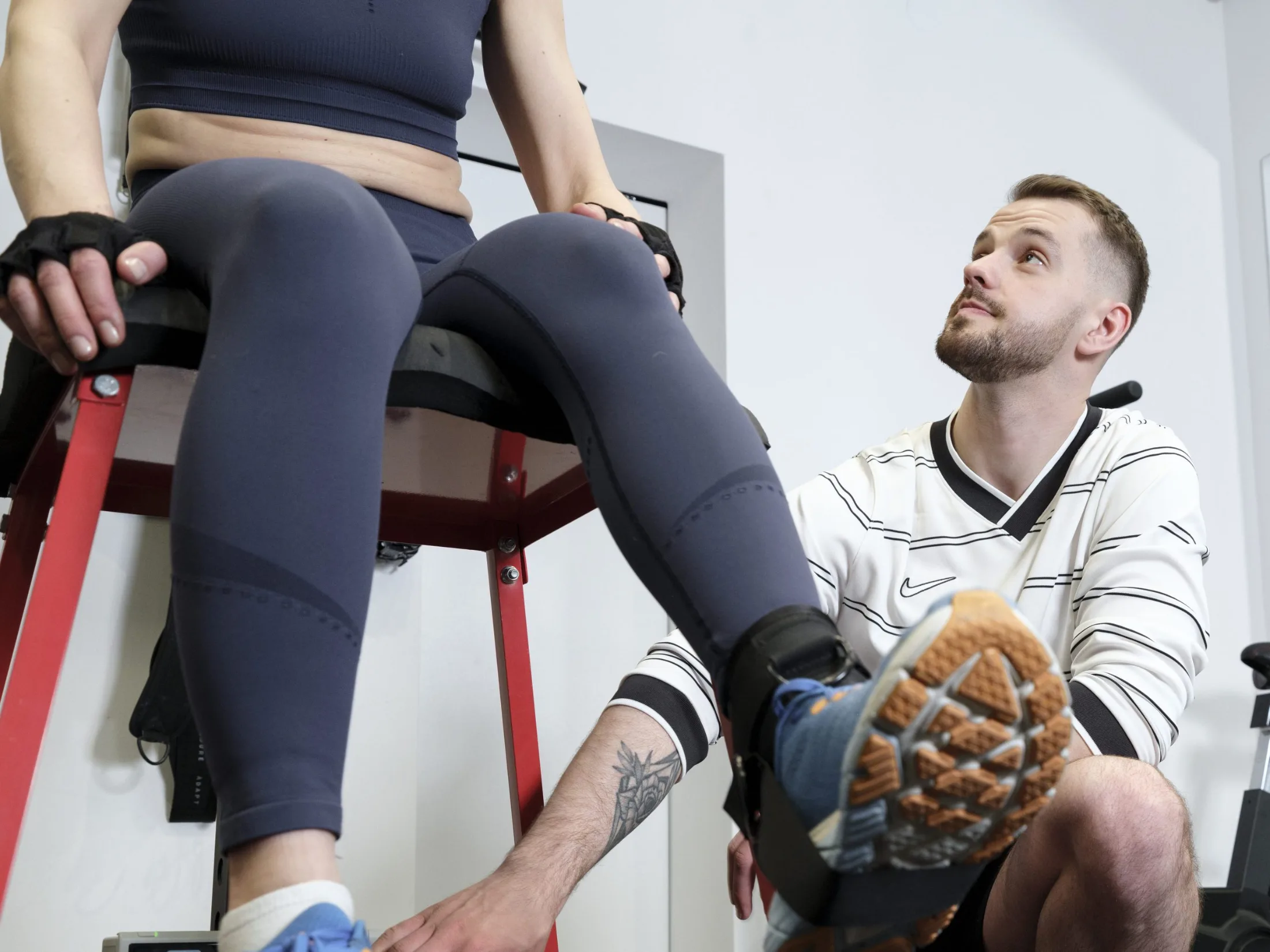
What patients come with
When to start knee rehabilitation
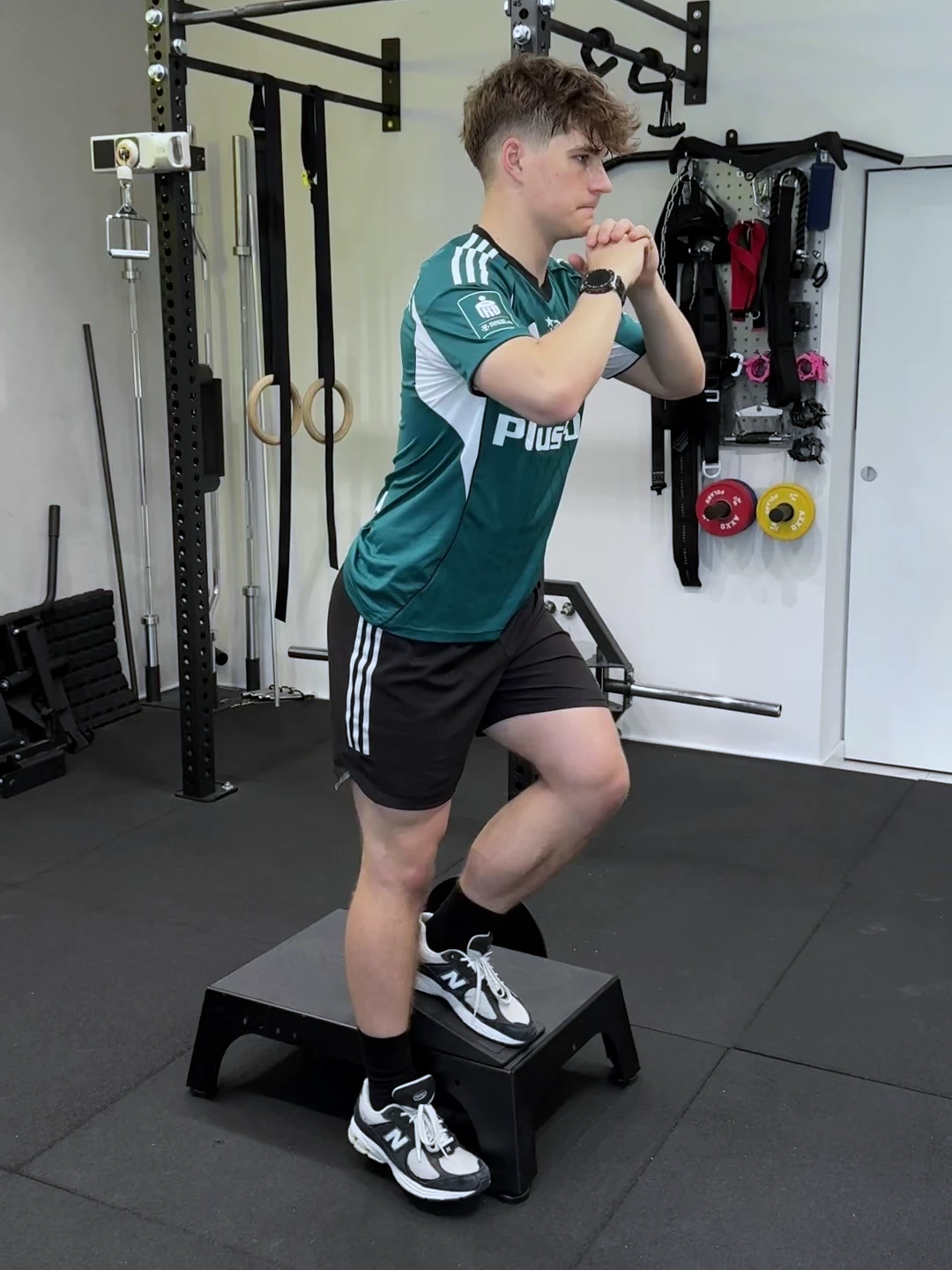
Injury without surgery
A sprain, a partial ligament tear, a meniscus injury or pain after a fall. The assessment shows what limits movement and lets us choose a safe load.
After knee surgery
After ligament reconstruction, meniscus repair, arthroscopy or a knee replacement. We work on mobility, strength and a return to everyday activities.
Overload pain
Jumper’s knee, runner’s knee, pain at the front of the knee (patellofemoral) or knee osteoarthritis. We strengthen the muscles, sort out the loads and teach movement control.
What a visit looks like
What knee rehabilitation looks like
- STEP 01
Interview and assessment
We ask about the circumstances of the injury, your symptoms and treatment so far. We assess range of motion, stability and muscle strength.
- STEP 02
Individual plan
We build the plan from scratch, adapt it to your stage and goals, and modify it as you progress.
- STEP 03
Exercise and technique
We teach correct exercise technique and movement control. Between visits you get exercises to do at home.
- STEP 04
Progress checks
We monitor progress continuously and adjust the plan to how the knee responds.
Reviews
What patients say about knee rehabilitation
Trafiłam z bólem kolana, a terapię zakończyłam bez bólu, ze sprawnym i wzmocnionym ciałem.
Jurek to świetny specjalista, który ma ogromną wiedzę i co najważniejsze wie, jak ją wykorzystać w pracy z pacjentem.
Anna Kosicko★★★★★
Knee pain
Zgłosiłam się do Jurka z bólem kolan, który pojawił się przez intensywne treningi i mecze.
Pracowaliśmy razem przez kilka miesięcy i dziś mogę śmiało powiedzieć, że ból prawie całkowicie zniknął.
Zuzanna★★★★★
Knee pain after intensive training
See all reviews on Google and Booksy (150+ reviews, average 5.0)
Price
How much does knee rehabilitation cost
260 PLN
Single visit
60 minutes. The first visit includes an interview, a review of your test results and an assessment of strength and movement patterns.
240 PLN
In a package of 4 visits
960 PLN per package. Good at the start of rehabilitation, when you need several weeks of regular work. Includes a body composition analysis worth 240 PLN.
220 PLN
In a package of 8 visits
1,760 PLN per package. Includes force plate tests and a body composition analysis worth 735 PLN in total.
Studio
Knee rehabilitation at Studio Wycisk
The studio is at Zamoyskiego 49, with the entrance from the Grochowska side. From Warszawa Wschodnia station it is about a 5-minute walk. Parking is about 50 m from the studio.
The same physiotherapist guides you from therapeutic exercise all the way to full loads.
Show on map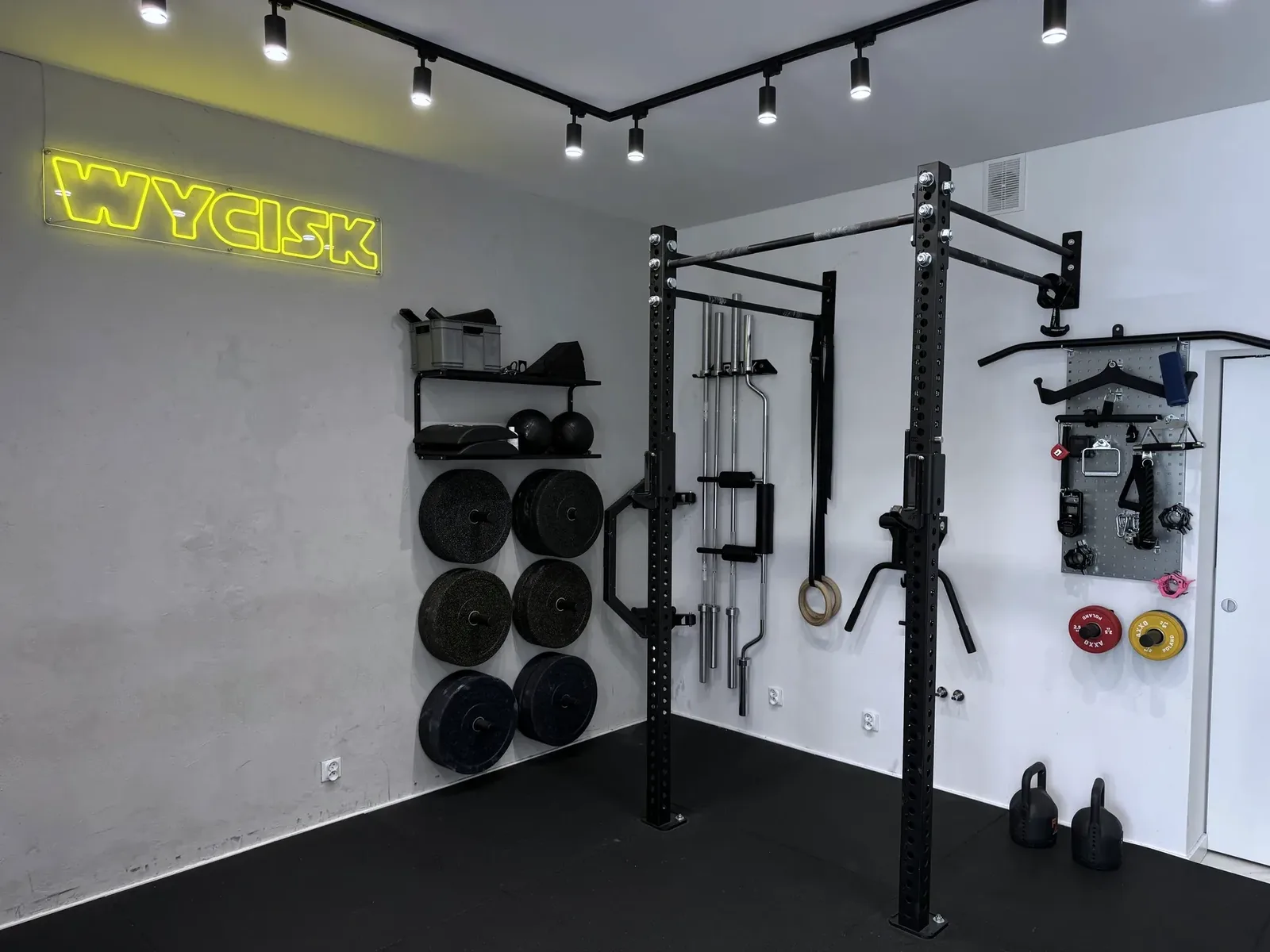
FAQ
Frequently asked questions about knee rehabilitation
We have collected the questions we hear from patients most often.
How long does knee rehabilitation take?
It depends on the injury, your health and your goals. The plan is modified continuously.
Can I exercise if my knee still hurts?
Usually yes, as long as the movement is well chosen and controlled. The first visit includes an interview that lets us choose safe steps.
Can I come after knee surgery?
Yes. We work with patients after ligament reconstruction, meniscus repair, joint replacements and with patellar chondromalacia, as well as after Achilles tendon rupture.
Do I need a referral?
No. It is worth bringing medical records if available, for example a hospital discharge summary, X-ray or MRI.
Read more about how we work
Knee rehabilitation in Warsaw
We see people with injuries without surgery and after orthopaedic procedures. In Praga-Południe, at Zamoyskiego 49, we deliver post-operative rehabilitation and knee physiotherapy.
What problems do we help with?
Ligament injuries
Injuries are divided into sprain, partial tear and complete rupture. Rehabilitation rebuilds strength and range of motion, especially in the early phase.
Meniscus injuries
Typical symptoms are clicking, locking of the knee and sharp pain on movement. Therapy can prepare you for surgery or speed up recovery afterwards.
Knock knees and bow legs
Deformities of the lower limb axis can cause pain and overload. Exercises strengthen the legs and stabilise the joint.
Jumper’s knee
An overuse injury of the patellar tendon, typical for volleyball and basketball players. Therapy strengthens the quadriceps and gradually introduces load.
Runner’s knee
It affects runners, cyclists and footballers. Repetitive movements overload the area around the kneecap. Rehabilitation includes strengthening, mobility and hip stabilisation.
Patellofemoral pain syndrome
It appears with long sitting with bent knees. Therapy relieves the joint through stretching and strengthening.
Knee osteoarthritis
Degeneration of the joint leading to pain, stiffness and inflammation. Therapy slows the progression of changes.
Baker’s cyst
A pocket of joint fluid in the back of the knee. Rehabilitation improves mobility and reduces symptoms.
What does the rehabilitation process look like?
Every case is different, and physiotherapy is a process, not a one-off visit.
Interview
We ask about the circumstances of the injury, your symptoms and previous treatment.
Functional assessment
We assess range of motion, stability, orthopaedic tests and muscle strength.
Individual plan
We build the plan from scratch and modify it as you progress.
Learning technique
We teach correct exercise technique, movement control and shock absorption in everyday activities.
Supporting exercises
Between visits you get exercises to do at home, matched to the stage of recovery.
Review and next steps
We monitor progress continuously. This also applies to rehabilitation after ACL reconstruction, arthroscopy and meniscus repair.
Why choose our team?
We work with professional athletes and amateurs alike, including Fortuna 1 Liga players and MMA and Brazilian jiu-jitsu competitors. Our physiotherapists train with experts abroad and at national conferences, including on meniscus treatment and arthroscopy.
Jerzy Wycisk has given webinars on chronic pain and rehabilitation. His content is available in the Wycisk podcast.
Written by Jerzy Wycisk, MSc, physiotherapist (PWZFz 78471). Updated: 5 November 2026.
Book your first visit
One hour for an interview, a functional assessment and a plan of work. We see patients at Zamoyskiego 49 in Praga-Południe.