Home / Chronic Back Pain Physiotherapy
Chronic back pain Warsaw
Does back pain make it hard to work, sleep or return to training? We start with a conversation and an examination, then choose exercises and a plan for returning to activity matched to your symptoms and everyday duties.
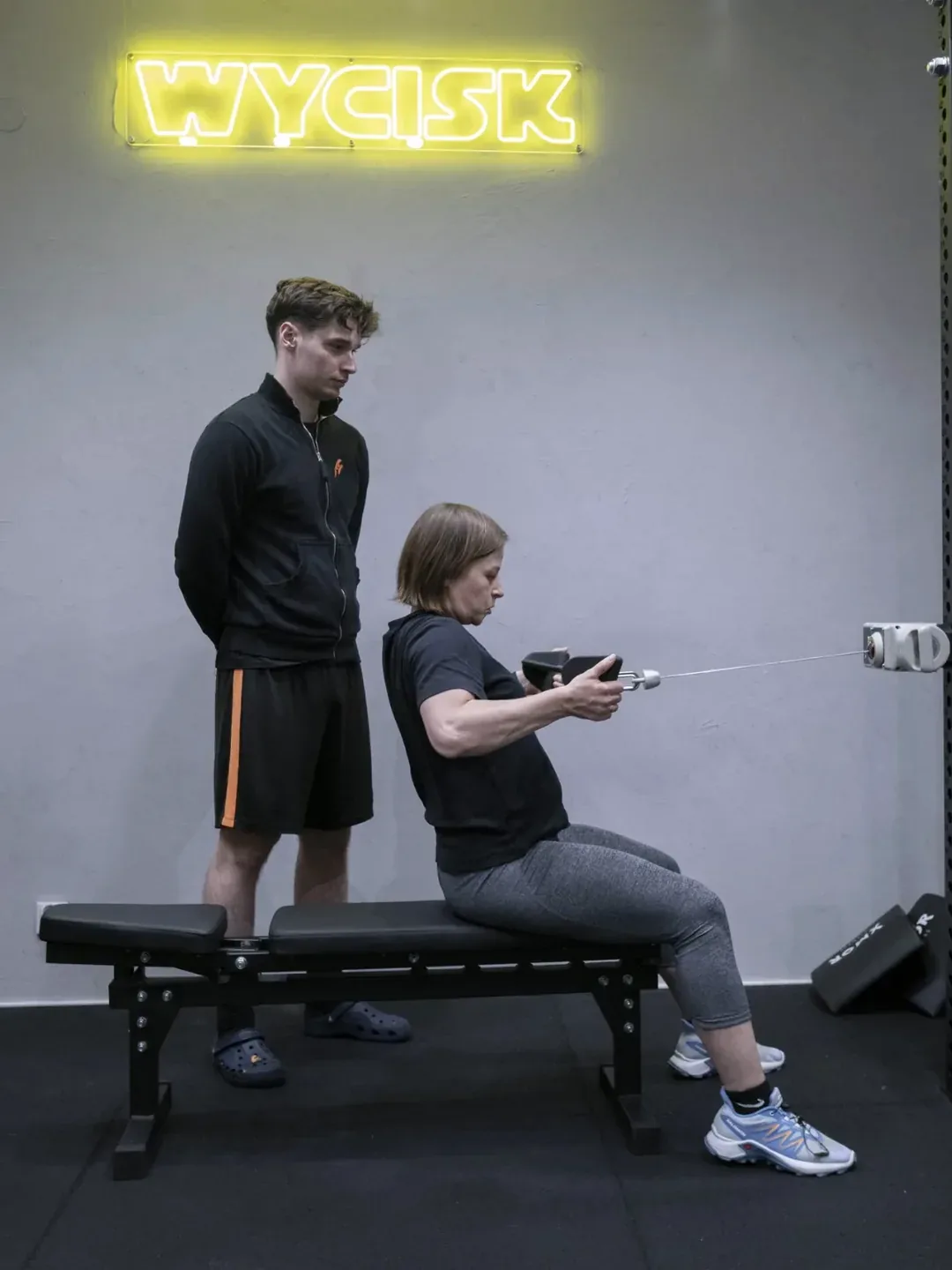
What patients come with
When to start physiotherapy for chronic back pain
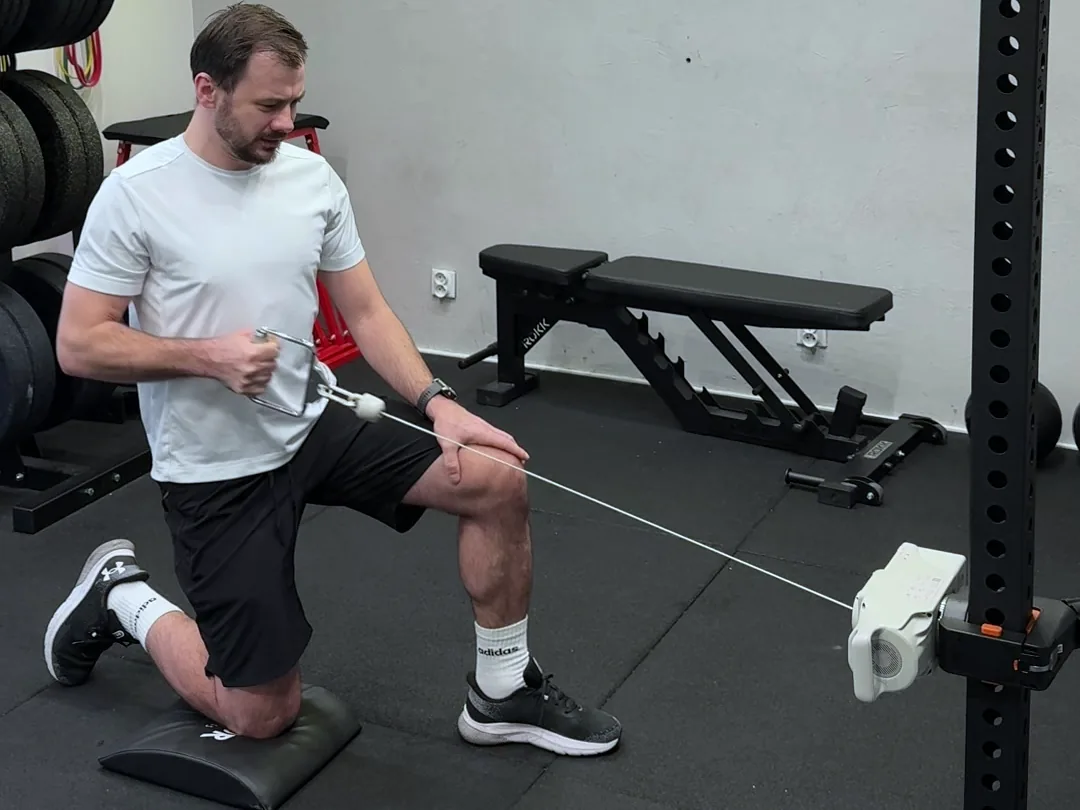
Pain persists or keeps returning
If symptoms limit your activity or return after repeated attempts to train, it is worth assessing the situation and setting a plan. We discuss previous treatment, the demands of your work and how you respond to movement.
You fear bending or lifting
We help you gradually get used to the movements you avoid. We match range, load and number of repetitions to your current abilities. The aim is greater capacity and confidence in everyday tasks.
You have an MRI report but do not know what next
We interpret an imaging result together with your symptoms and the functional examination. A description of changes alone does not define your fitness or automatically mean you must not exercise. If additional diagnostics are needed, we refer you for a medical consultation.
What a visit looks like
What physiotherapy for chronic back pain looks like
- STEP 01
Conversation and examination
We ask about the course of your symptoms, your health, sleep, work and activity. We examine movement and the tasks that give you difficulty. Where indicated, we recommend a medical consultation.
- STEP 02
A plan matched to your everyday life
We choose concrete goals, for example a longer walk, bending freely or returning to the gym. We set how often we meet and the exercises between visits.
- STEP 03
Gradually increasing activity
We work on strength, movement and fitness. We modify the load depending on how you respond to exercise. We also discuss what to do during a temporary flare-up of pain.
- STEP 04
Assessing progress
We check not only the intensity of symptoms but also what you can already do. We change the plan as you progress, so that you can do more and more on your own.
Reviews
What patients with spinal pain say
Dzięki jego zaangażowaniu udało mi się uniknąć operacji kręgosłupa, którą już drugi raz zalecał mi neurochirurg.
Przez trzy miesiące ćwiczyliśmy regularnie dwa razy w tygodniu. Jerzy pomógł mi stanąć na nogi – dosłownie i w przenośni.
Monika Gajda★★★★★
Spinal pain, surgery avoided
Choruję również na spondyloartropatię osiową, ale podczas współpracy nie czuję się traktowana jak „chory” czy słaby człowiek.
Wręcz przeciwnie, czuję wsparcie, motywację i realną pomoc, zamiast słyszeć, że np. muszę się pogodzić z bólem. Dodatkowy ogromny plus za doradztwo treningowe – wspólnie omawiamy ćwiczenia, wiem co mogę robić i jak trenować bez strachu. Robię podskoki, trenuję siłowo i nie odczuwam bólu.
Magdalena Olszówka★★★★★
Spondyloarthropathy
See all reviews on Google and Booksy (150+ reviews, average 5.0)
Price
How much does physiotherapy for chronic back pain cost
260 PLN
Single visit
60 minutes. The first visit includes an interview, a review of your test results and an assessment of strength and movement patterns.
240 PLN
In a package of 4 visits
960 PLN per package. Good for a start, when you need several weeks of regular work. Includes a body composition analysis worth 240 PLN.
220 PLN
In a package of 8 visits
1,760 PLN per package. Includes force plate tests and a body composition analysis worth 735 PLN in total.
Studio
Physiotherapy for chronic back pain in Praga-Południe
The studio is at Zamoyskiego 49, with the entrance from the Grochowska side. From Warszawa Wschodnia station it is about a 5-minute walk. Parking is about 50 m from the studio.
The same physiotherapist guides you from therapeutic exercise all the way to full loads.
Show on map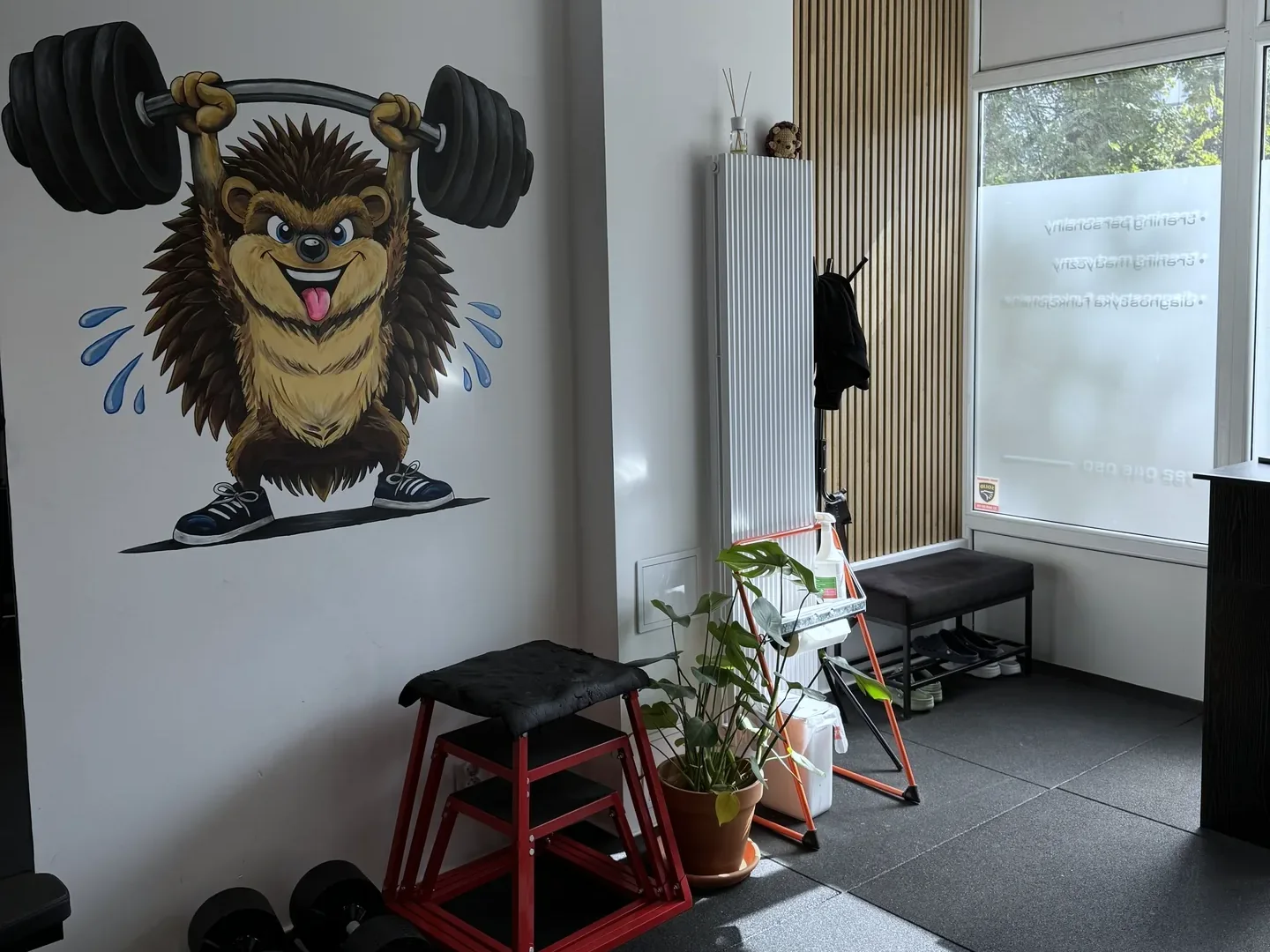
FAQ
Frequently asked questions about chronic back pain
We have collected the questions we hear from patients most often.
Do I need an MRI before the visit?
Not always. In back pain, imaging is not routinely needed for everyone. First we assess symptoms and the history of the problem. If you have earlier results, bring them with you.
Can I exercise if my back hurts?
Often activity can be chosen despite symptoms, but it needs an assessment. We do not use a single acceptable pain value for everyone. We agree how to watch your response during and after exercise and when to reduce the load.
How many visits will I need?
It depends on how long the problem has lasted, your goals and your response to the plan. We discuss frequency after the examination and update it as we work together. We do not promise that pain will go away after a set number of sessions.
When is urgent medical help needed?
New problems with bladder or bowel control, loss of sensation in the groin area or rapidly worsening leg weakness require urgent medical assessment. Do not wait for a routine physiotherapy visit in that case.
How do I prepare for the visit and how much does it cost?
Bring comfortable clothing and any medical records you have. You do not need new tests just for the visit. You will find consultation and package prices in the current price list.
Read more about how we work
Chronic back pain Warsaw: how we work
What chronic back pain is
Chronic pain is discomfort that lasts more than three months. It cannot always be attributed to a single structure. Sleep, stress, past experiences and changes in activity can also influence how pain is felt and how you function day to day. At the consultation we check what matters in your situation.
Back pain is one of the most common reasons people seek help from a physiotherapist. In most cases it is non-specific, meaning the examination does not point to a single damaged element that would fully explain the symptoms. This does not mean the pain is imagined. It is real, and over time the nervous system can react to stimuli from the area of the spine more strongly than at first. That is why we work within the biopsychosocial model and look wider than the spine itself: at sleep, activity levels, work demands, stress and beliefs about your own back.
The spine is a robust structure that adapts to load, not a fragile column that needs protecting from bending or lifting. This approach comes from current knowledge about pain and shapes everything we do during visits.
The basis of our work is individually chosen exercise, education and gradually increasing activity. You do not have to start with heavy training. We set a realistic starting point and then check whether it is easier for you to walk, sit, bend and do the things that matter to you.
Why an MRI result does not always explain pain
In an MRI report it is easy to come across terms that sound alarming: discopathy, herniation, protrusion, disc dehydration, degenerative changes. Yet such changes are common also in people who have no back pain, and they become more frequent with age. This was shown, among others, by a systematic review of imaging studies in people without symptoms, published in 2015 in the American Journal of Neuroradiology. Many of these changes are a natural part of tissue ageing, like wrinkles on the skin.
An imaging result tells you about structure, but not how much something hurts, how it will respond to movement or whether it is the cause of your symptoms. An MRI is sometimes needed, for example when a serious cause of pain is suspected or before a decision about surgery, but in chronic back pain it rarely decides which exercises to choose. We read the report together with your symptoms and the functional examination. We want to make sure that the words in the report do not become a reason to avoid movement.
The most common back problems
Lower back pain
This is the most common form of back pain. It can appear when getting up, after standing for a long time, when bending or for no obvious reason. We look for the movements and loads that aggravate the symptoms and those that ease them, and then gradually widen the range of what you do without pain.
Sciatica
Pain radiating to the buttock or leg, sometimes with tingling, is often called sciatica. It may be related to irritation of a nerve root, but it is not always. During the examination we check sensation, strength and reflexes, and how the symptoms change with movement. Most people with this kind of pain can exercise, and we adapt the approach to the severity of the symptoms.
Discopathy and disc herniation
These are diagnoses from an imaging report that do not always go hand in hand with pain. If you have them in your result, it does not mean you have to give up movement. We assess how you function and on that basis decide which exercises to start with. When neurological symptoms get worse, we refer you for a medical consultation.
Pain after lifting
Pain that appeared after lifting something heavy or after training often raises the fear that something has been damaged. Usually it is a temporary overload of the tissues and sensitivity to movement, not proof of damage. We help you judge when and in what form to return to movement, and then plan a gradual return to lifting.
Pain when sitting
Symptoms that get worse with prolonged sitting are common in people who work at a desk or in a car. There is no single ideal sitting position. The problem is more often staying in one position for a long time than the position itself. Together we look for practical ways to change position and spread activity across the day, and the exercise plan takes into account what you do for work.
When to see a doctor first
Chronic back pain usually does not have a serious cause, but a few symptoms require prompt medical diagnosis before we start exercising. Contact a doctor or go to A&E if you have:
- altered sensation in the groin area,
- difficulty passing urine or incontinence of urine or stool,
- increasing weakness in the leg or foot,
- fever accompanying back pain,
- unexplained weight loss,
- pain after an injury, for example after a fall or an accident.
If we notice such a symptom during the examination, we will hold off on exercise and refer you for a consultation.
Why exercise works
Exercise is one of the best-studied approaches to chronic back pain. The 2023 World Health Organization guidelines on chronic primary low back pain list exercise programmes and education among the recommended methods. Exercise does not work, however, because someone strengthens a particular stabilising muscle or corrects the alignment of the spine.
Regular movement increases strength and the tissues’ tolerance to load, improves fitness, reduces the sensitivity of the nervous system and lets you see in practice that your back can handle more than you fear. For many people this change in confidence is an important part of improvement. That is why we do not look for one miracle exercise, but choose the ones you like and can keep doing.
How we work
Conversation and examination
We start with an interview and a movement assessment. We ask about the course of the pain, what aggravates and eases it, and what matters to you. We also check whether there are grounds for a medical consultation.
Education
We explain how pain works and what the results of your tests mean. Good information reduces fear of movement, which can be one of the factors that keep symptoms going.
Exercise therapy and strength training
We treat with movement. We use kinesiotherapy, meaning therapeutic exercise, and as you progress we introduce strength training matched to your goals, from everyday activities to a return to the gym. We do not base therapy on massage, manual therapy, mobilisation or physical therapy modalities.
Gradually increasing the demands
We increase the load, range of motion and number of repetitions at a pace you can sustain. Follow-up visits are used to discuss how you respond to the exercises and to adjust the plan.
Spine rehabilitation Warsaw, Praga-Południe
Wycisk Physiotherapy and Training is a private physiotherapy and training centre in Praga-Południe in Warsaw. We are at Zamoyskiego 49, about a 5-minute walk from Warszawa Wschodnia station. We see patients from Grochów, Saska Kępa and other districts of Warsaw who are looking for exercise-based spine rehabilitation.
Our team is made up of physiotherapists who also work as personal trainers. This combination helps in the final stage of the work, when back pain eases and it is worth returning to full activity, including strength training.
We keep expanding the knowledge this work rests on: we have completed over 1,000 hours of training with experts from Poland and abroad, including Adam Meakins, Ben Cormack and Greg Lehman. We also test it where the demands are highest: we have prepared 1 Liga footballers and medallists of the Polish Championships in combat sports. Most often, though, the people who come to us are working adults, parents and amateur athletes.
Written by Jerzy Wycisk, MSc, physiotherapist (PWZFz 78471). Updated: 5 November 2026.
Book your first visit
One hour for an interview, a functional assessment and a plan of work. We see patients at Zamoyskiego 49 in Praga-Południe.