Home / Hip Pain Physiotherapy
Hip pain Warsaw
Hip pain when walking, running, getting up or lying on your side does not have to mean giving up movement. We will check what limits your movement and set a plan of exercise and a gradual return to activity.
What patients come with
When to start rehabilitation for hip pain
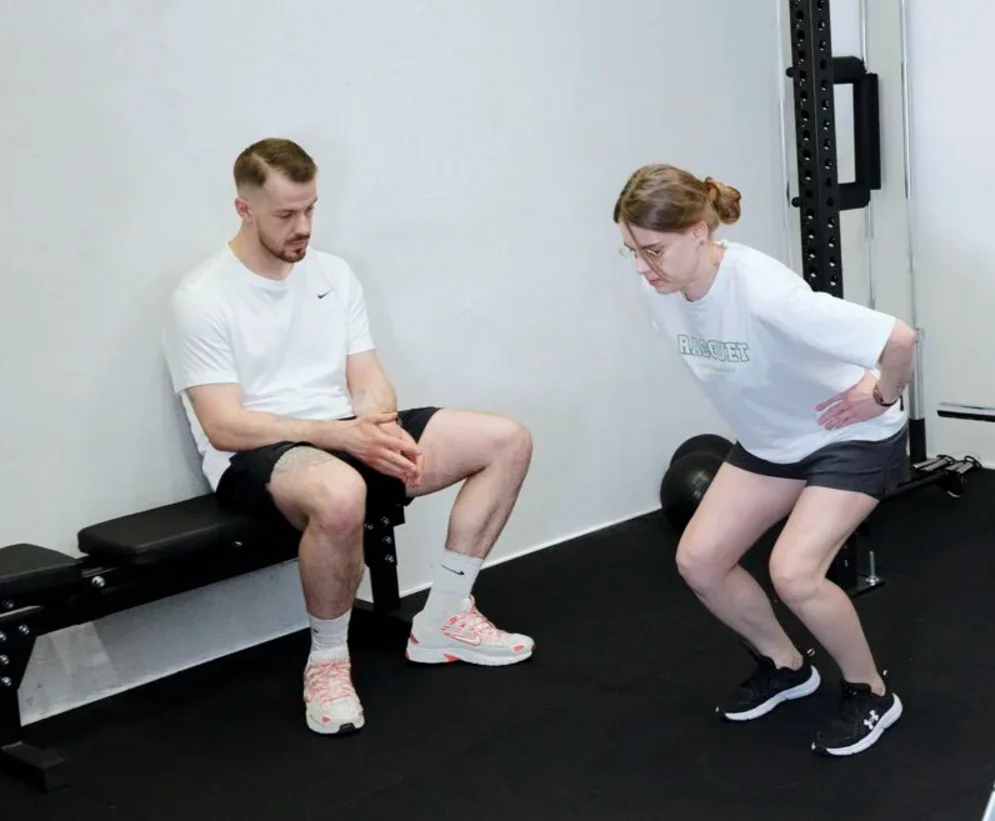
Pain when walking and in everyday activities
Difficulty with stairs, putting on shoes or a longer walk helps us define the goals of rehabilitation. We check which tasks are limited and what dose of activity you can start from.
Pain on the outer side of the hip
Symptoms can worsen when lying on your side or standing on one leg. We assess the situation, choose exercises and discuss changes to daily loads. The location of pain alone is not enough for a diagnosis.
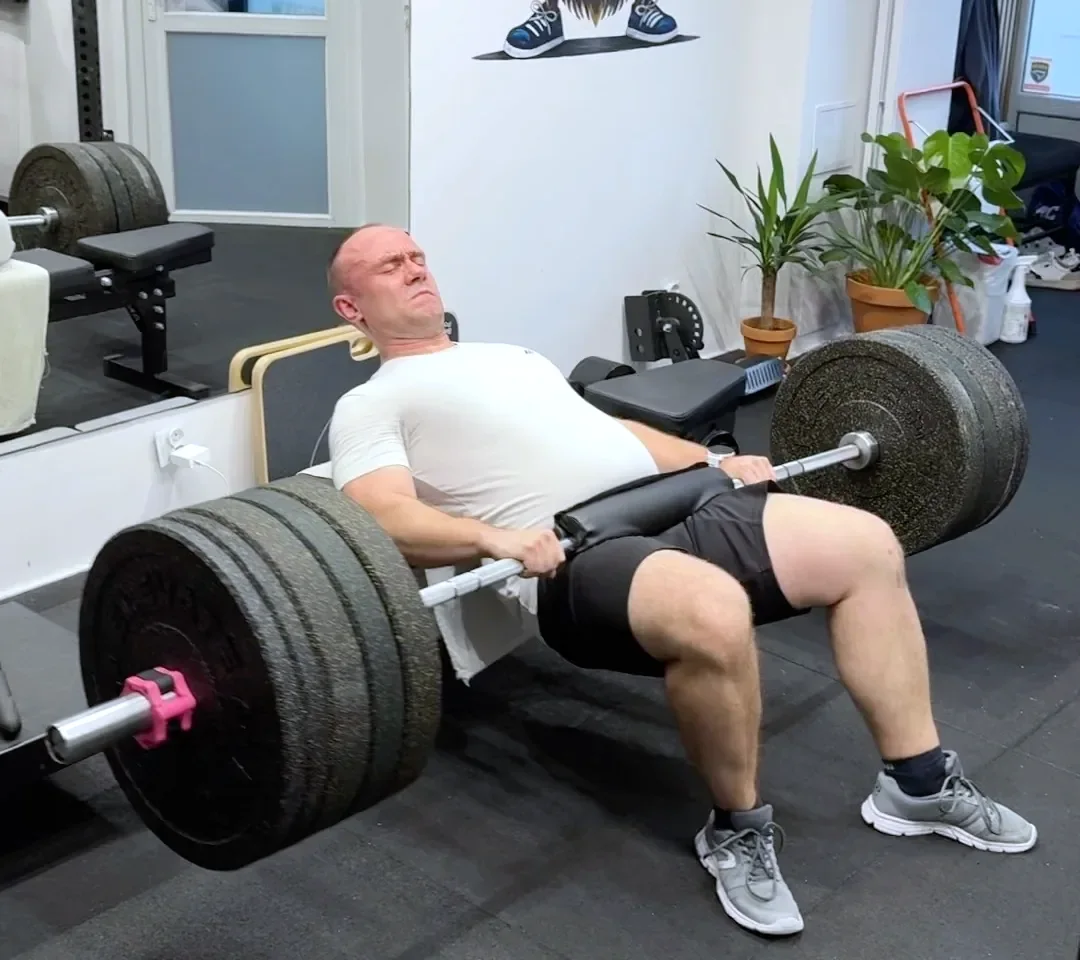
Discomfort when running or training
We analyse changes in training volume and intensity, recovery and the demands of your discipline. We modify training and gradually restore the movements needed for your sport.
What a visit looks like
What rehabilitation for hip pain looks like
- STEP 01
Assessing the problem
We talk about symptoms and examine mobility, strength and selected tasks, for example gait, squat or stepping up. The result helps set a starting point.
- STEP 02
A shared plan
We set goals and exercises that can be done in the studio and at home. If you are under an orthopaedist’s care, we take their recommendations into account.
- STEP 03
Exercise and load selection
We gradually develop strength and capacity. We watch the response to effort and, if needed, change range of motion, resistance or exercise frequency.
- STEP 04
Returning to important activities
We check progress in the tasks that matter to you. A return to sport may require preparation for running, jumping or changes of direction, depending on the discipline.
Reviews
What patients with hip pain say
Na ściankę wspinaczkową wróciłem znacznie szybciej niż na początku zakładaliśmy.
Pracowaliśmy w oparciu o sprawdzone naukowo metody, z tygodnia na tydzień czułem poprawę siły i sprawności. Powrót do sportu nastąpił po testach siły, skoczności i zakresu ruchu, żeby zminimalizować ryzyko kontuzji.
Michał★★★★★
Hip arthroscopy: removal of femoroacetabular impingement and labral repair
Dzięki jego wiedzy, zaangażowaniu i indywidualnemu podejściu udało się zmniejszyć ból kręgosłupa, który wcześniej utrudniał mi codzienne funkcjonowanie.
Bardzo polecam współpracę z Jerzym! Każdy trening jest dobrze przemyślany i dostosowany do możliwości oraz potrzeb. Zdecydowanie polecam każdemu kto chce zadbać o swoją sprawność i zdrowie.
Joanna Tulidowicz★★★★★
Spine and hip pain
See all reviews on Google and Booksy (150+ reviews, average 5.0)
Price
How much does rehabilitation for hip pain cost
260 PLN
Single visit
60 minutes. The first visit includes an interview, a review of your test results and an assessment of strength and movement patterns.
240 PLN
In a package of 4 visits
960 PLN per package. Good at the start of rehabilitation, when you need several weeks of regular work. Includes a body composition analysis worth 240 PLN.
220 PLN
In a package of 8 visits
1,760 PLN per package. Includes force plate tests and a body composition analysis worth 735 PLN in total.
Studio
Physiotherapy and training in Praga-Południe
The studio is at Zamoyskiego 49, with the entrance from the Grochowska side. From Warszawa Wschodnia station it is about a 5-minute walk. Parking is about 50 m from the studio.
The same physiotherapist guides you from therapeutic exercise all the way to full loads.
Show on map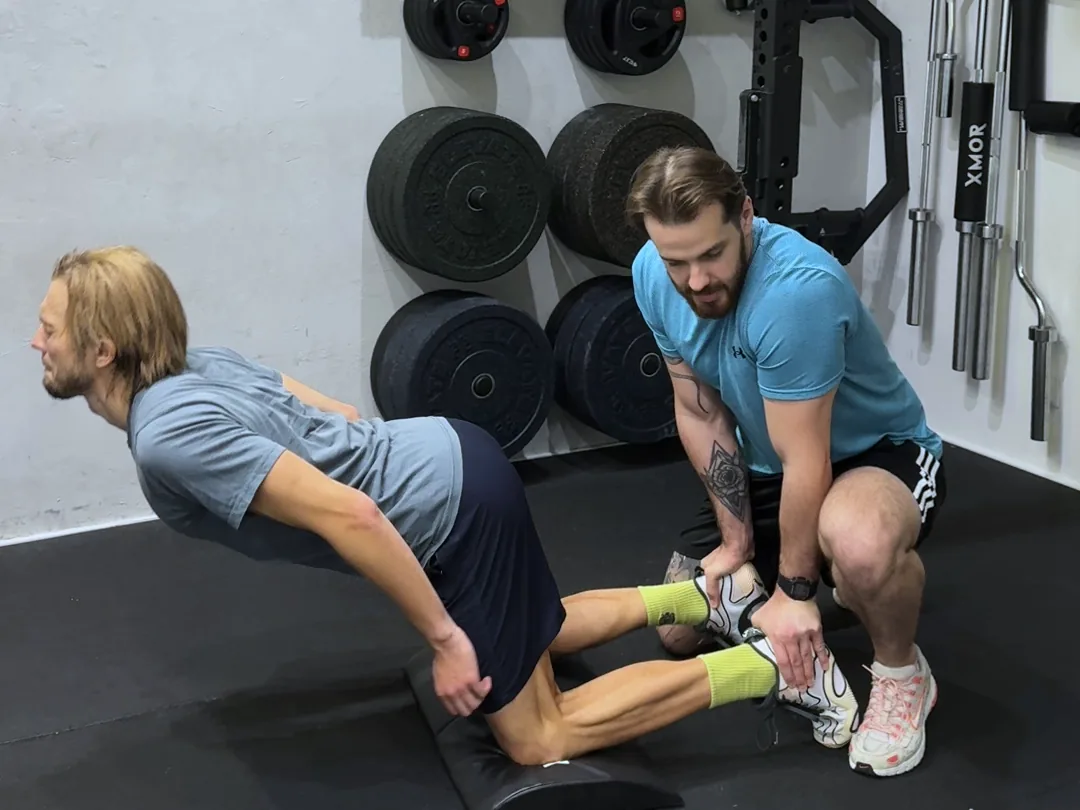
FAQ
Questions before your first visit
Does hip pain always mean degeneration?
No. Similar symptoms can accompany different problems of the joint, muscles and tendons, and sometimes come from another area. That is why we start with a conversation and an examination instead of choosing exercises only by the place of pain.
Do I need an X-ray or MRI?
Not everyone needs imaging before the first visit. If you have results, bring them. The need for further diagnostics is decided by symptoms, the examination and whether a result could change the management.
Is it worth exercising with degenerative changes?
Yes, properly chosen exercise can improve function and reduce symptoms. It does not, however, reverse all changes in the joint. We match load to your body’s response and your health.
When should I see a doctor first?
Severe pain after an injury with an inability to bear weight on the leg requires urgent assessment. Contact a doctor urgently also in case of fever and sudden severe joint pain. We do not try to exercise such symptoms away.
Do you prepare patients for joint replacement?
Yes. After qualification for surgery we can work on fitness and preparation for everyday activities after the operation, in line with the recommendations of the treating team. We set the plan individually.
How do I prepare for the first visit?
Bring comfortable clothing, any test results you have and your doctor’s recommendations. At the consultation we will set goals and the next steps. You will find the cost of visits in the price list.
Read more about how we work
Hip pain Warsaw: how we work
The most common causes of hip pain
Pain around the hip can have different sources. Discomfort in the groin, on the outer side of the thigh and in the buttock does not have to mean the same problem. At the visit we assess the hip and, where needed, the neighbouring areas. We take into account the history of injury, coexisting conditions and the results of earlier tests. Below we describe the diagnoses patients come to us with.
Gluteal tendinopathy
Pain on the outer side of the hip that worsens when lying on your side, climbing stairs, standing for a long time or running is often related to tendinopathy of the gluteal tendons. This is tendon overload, not inflammation that needs calming down. The basis of management is loading exercise, dosed so that the tendon gradually regains its tolerance to effort. At first we pay attention to positions that may irritate the painful area, for example crossing your legs.
Femoroacetabular impingement (FAI)
Femoroacetabular impingement is a term for a shape of the hip bones that may favour pain with deep flexion of the joint, for example in a squat or when sitting. Changes in bone shape visible on imaging are common also in people without pain, especially in active athletes. That is why the diagnosis is based on symptoms, the examination and imaging together, not on the report alone. For many people we start with exercises that improve strength and movement control, and with adapting the depth and manner of movements to what the hip tolerates.
Labral tear
The labrum is the cartilaginous rim of the socket. Labral tears are a common finding on MRI, also in people without symptoms, so the report alone does not explain whether it is responsible for the pain. We assess symptoms such as groin pain, a feeling of catching or clicking, and then choose exercises. When symptoms persist or limit function despite exercise, we discuss an orthopaedic consultation with you.
Degenerative changes
Exercise adapted to your abilities is an important part of managing hip osteoarthritis. The aim is to improve strength and everyday function. Changes visible on imaging do not always match the severity of pain, so we look at what you do every day and what you want to keep doing. When symptoms require an orthopaedic consultation, we discuss it with you.
Groin pain in athletes
Groin pain in footballers, runners and combat sports athletes can come from different sources: the adductors, the iliopsoas, the inguinal canal area, the pubic symphysis or the hip joint itself. According to the 2015 Doha expert agreement, it is worth distinguishing between them, because the choice of exercises depends on it. After the assessment we plan a gradual return to running, changes of direction and kicking, taking into account the demands of your sport.
Hip pain or back pain
The hip, buttock and lower back lie close to each other, and pain from one of them can be felt in another. Symptoms in the buttock and the back of the thigh are sometimes related to the lumbar spine, and groin pain to the hip joint itself. That is why during the examination we check hip mobility, muscle strength, how the symptoms respond to different movements, and tests for the lumbar spine. The pattern of radiating pain can be misleading, and an accurate distinction lets us direct the exercises to the right place. If the problem involves both areas, we work on them together.
After hip arthroscopy
Hip arthroscopy is a procedure performed, among other things, for femoroacetabular impingement and labral tears. Rehabilitation afterwards depends on the type of procedure and the surgeon’s recommendations, which specify how and when to load the leg and what range of motion to avoid at first. We follow these recommendations. In later stages we work on range of motion, strength, walking and a gradual return to everyday activity, and then to training and sport. Bring your hospital discharge summary and the surgery report to the visit, if you have them.
When to see a doctor first
With hip pain, some symptoms require a medical consultation or urgent help first. See a doctor or go to A&E if:
- the pain appeared after an injury and you cannot put weight on the leg,
- the hip is painful, hot or swollen and you also have a fever,
- the pain is increasing and does not ease at night or at rest,
- you have unexplained weight loss,
- you have altered sensation in the groin area or problems passing urine,
- a child or teenager is limping and complains of hip or knee pain.
If such symptoms appear while we are working together, we will stop the exercises and refer you for a consultation.
How we work
We work on movement, strength and load tolerance. The choice of exercises depends on whether you want to walk more freely, return to running or prepare for strength training. There is no single set that suits every person with hip pain.
Assessment and setting goals
We start with a conversation and a functional assessment of the hip, the lumbar spine and the whole lower limb. We establish what matters to you: a short walk without pain, stairs, running, kicking or heavy training.
Exercise therapy and strength training
We treat with movement. We use kinesiotherapy, meaning therapeutic exercise, and as you progress we move on to strength training. We do not base therapy on massage, manual therapy, mobilisation or physical therapy modalities.
Education and gradually increasing the demands
We explain what your test results and symptoms mean, and we increase the load at a pace the hip tolerates. Follow-up visits are used to discuss how you respond to the exercises and to adjust the plan.
Hip rehabilitation Warsaw, Praga-Południe
Wycisk Physiotherapy and Training is a private physiotherapy and training centre in Praga-Południe in Warsaw. We are at Zamoyskiego 49, about a 5-minute walk from Warszawa Wschodnia station. We see patients from Grochów, Saska Kępa and other districts of Warsaw.
We combine physiotherapy with preparation for everyday activity and training. We choose exercises to your abilities and raise the demands as you progress. Our team is made up of physiotherapists who also work as personal trainers.
We keep expanding the knowledge this work rests on: we have completed over 1,000 hours of training with experts from Poland and abroad, including Adam Meakins, Ben Cormack and Greg Lehman. We also test it where the demands are highest: we have prepared 1 Liga footballers and medallists of the Polish Championships in combat sports. Most often, though, the people who come to us are working adults, parents and amateur athletes.
Written by Jerzy Wycisk, MSc, physiotherapist (PWZFz 78471). Updated: 5 November 2026.
Book your first visit
One hour for an interview, a functional assessment and a plan of work. We see patients at Zamoyskiego 49 in Praga-Południe.