Home / ACL Rehabilitation in Warsaw
ACL reconstruction rehabilitation Warsaw
A torn cruciate ligament is not a life sentence, but returning to sport requires well-planned rehabilitation. We guide you from the first days after surgery back to the pitch, the mat or the gym, and we base decisions on tests, not on the calendar.
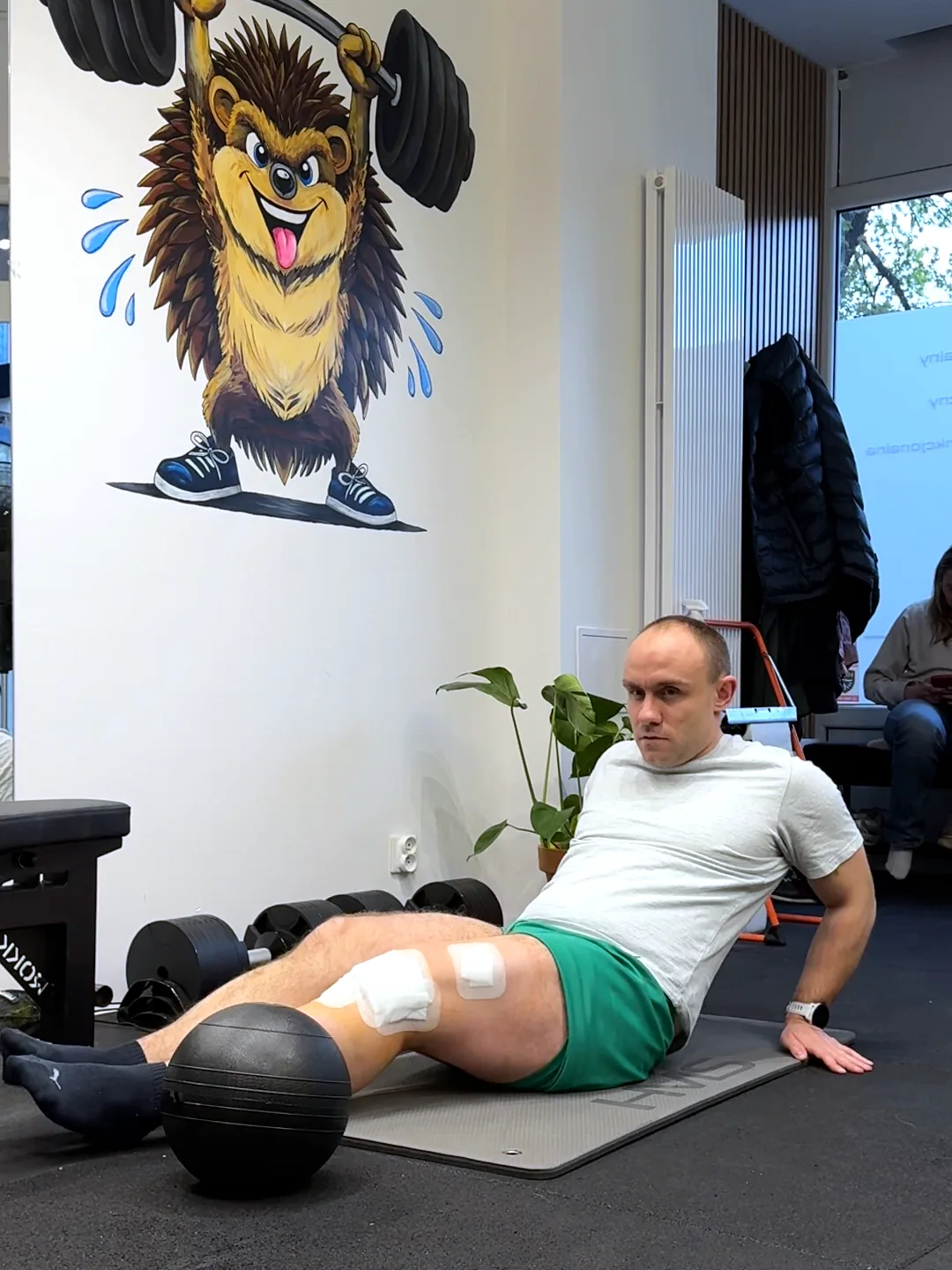
What patients come with
When to start rehabilitation after ACL reconstruction
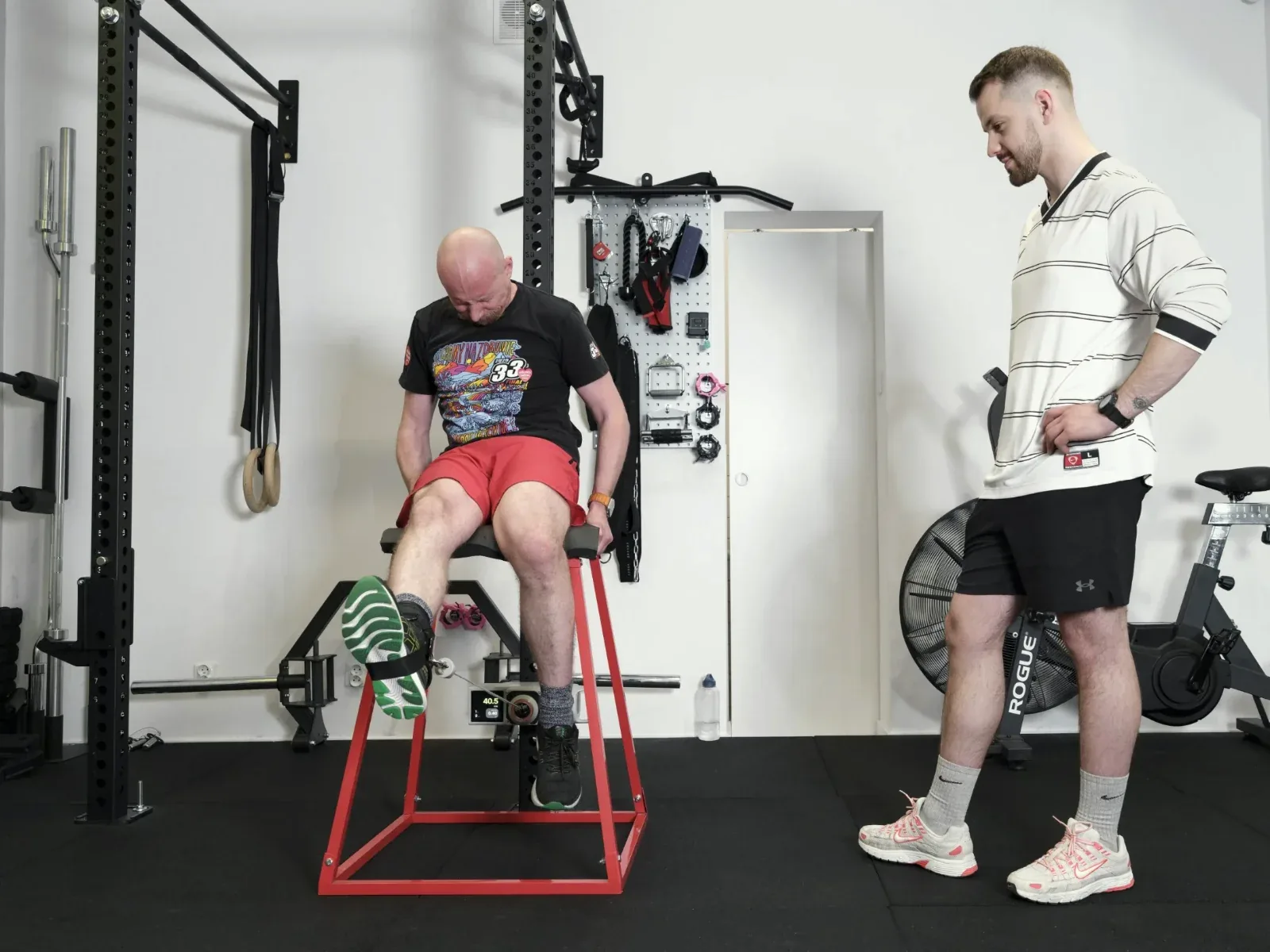
Before surgery
Prehabilitation reduces swelling and pain, improves muscle strength and prepares the knee for the procedure. Patients who start with us before surgery begin from a higher level after the operation.
Right after surgery
From the first days we work on swelling, full knee extension and flexion, and quadriceps activation. The earlier you start, the less muscle wasting and the sooner you walk without crutches.
A few weeks or months later
If a few weeks have already passed since surgery, it is still a good moment. We start from where you are now and adapt the plan to what your knee can do at present.
What a visit looks like
What rehabilitation after ACL reconstruction looks like
- STEP 01
Diagnosis
An interview about how the injury happened, the surgery and your sporting goals. We assess range of motion, swelling, strength and knee control.
- STEP 02
Individual plan
We choose exercises for your stage after surgery and your sport. We adjust the plan as we go to how the knee responds, for example to swelling the next day.
- STEP 03
Regular sessions
Therapeutic exercise and strength training that get harder as the knee becomes more capable.
- STEP 04
Tests before the next stage
We regularly repeat strength and symmetry tests. You start the next stage when the test results allow it, not because a certain week has passed.
Reviews
What patients say after ACL reconstruction
Wszystko jest wnikliwie analizowane i obrazowane, cykl treningowy klarownie rozpisywany, a kontakt – momentalny.
Do Jerzego trafiłem po rekonstrukcji ACL oraz szyciu łąkotki. Jestem w 4 miesiącu rehabilitacji i wszystko idzie w super kierunku, progres jest bardzo duży, zawsze wychodzę spełniony i z rzeczywistym, realnym uczuciem tego, że jest co raz lepiej.
Jakub Matelak★★★★★
ACL reconstruction and meniscus repair
Mija czas, a ja już wiem, że wrócę na boisko i matę silniejszy, niż byłem kiedykolwiek wcześniej.
Współpracuje z Jurkiem od początku po mojej rekonstrukcji ACL. Czuję się mega zaopiekowany i wiem, że plan, który realizujemy, jest całkowicie indywidualny pod moje potrzeby, braki i mocne strony.
Karol Domański★★★★★
Rehabilitation after ACL reconstruction
See all reviews on Google and Booksy (150+ reviews, average 5.0)
Price
How much does rehabilitation after ACL reconstruction cost
260 PLN
Single visit
60 minutes. The first visit includes an interview, a review of your test results and an assessment of strength and movement patterns.
240 PLN
In a package of 4 visits
960 PLN per package. Good at the start of rehabilitation, when you need several weeks of regular work. Includes a body composition analysis worth 240 PLN.
220 PLN
In a package of 8 visits
1,760 PLN per package. Includes force plate tests and a body composition analysis worth 735 PLN in total.
Studio
Rehabilitation after ACL reconstruction in Praga-Południe
The studio is at Zamoyskiego 49, with the entrance from the Grochowska side. From Warszawa Wschodnia station it is about a 5-minute walk. Parking is about 50 m from the studio.
The same physiotherapist guides you from therapeutic exercise all the way to full loads.
Show on map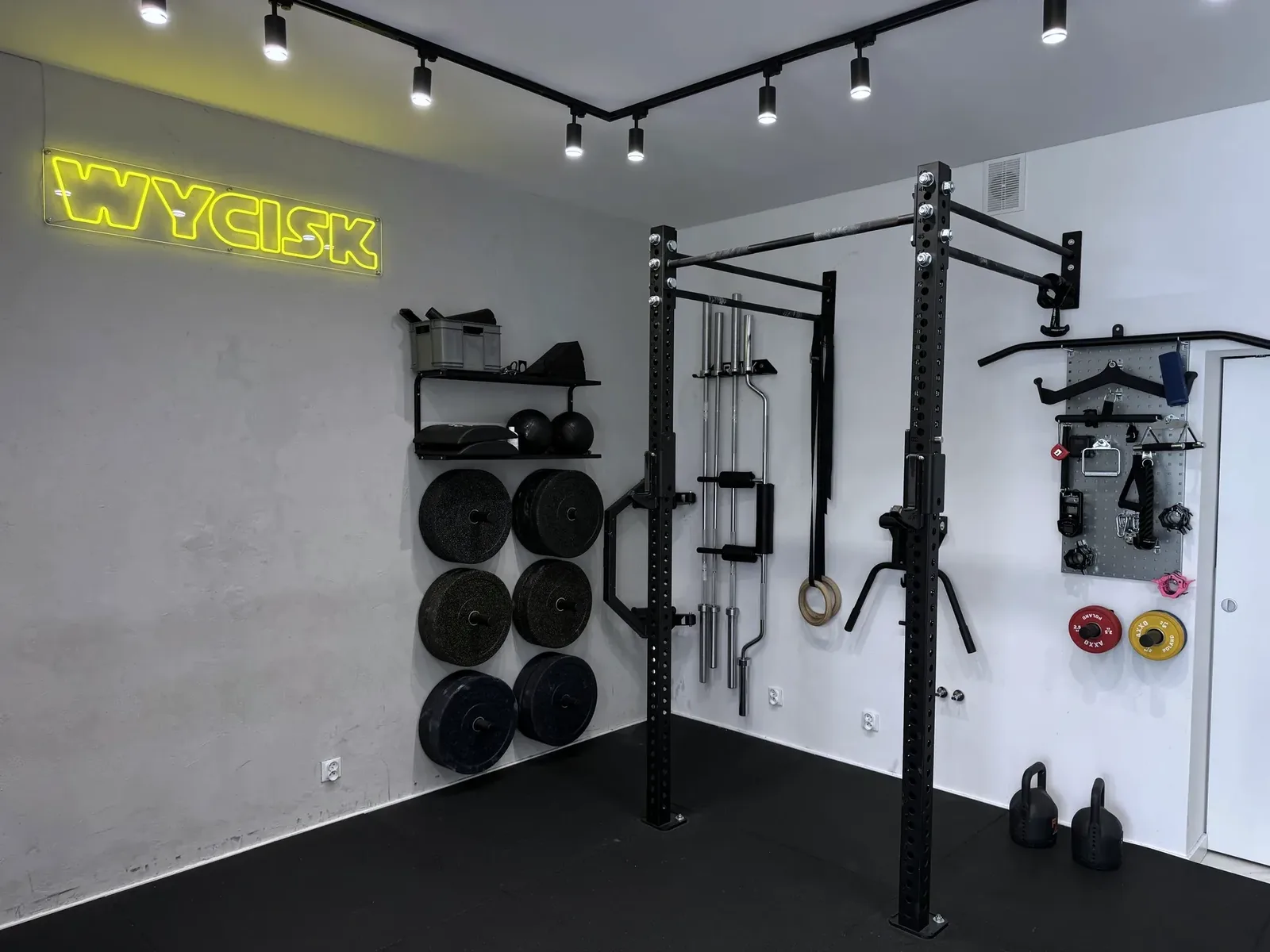
FAQ
Frequently asked questions about rehabilitation after ACL reconstruction
We have collected the questions we hear from patients most often.
Who is rehabilitation after ACL reconstruction for?
Most often we work with people who tore their ACL during sport: on a football pitch, a martial arts mat, a ski slope or during an ordinary recreational run. We also see patients whose knee gave way while walking down stairs or playing with a child in the park. The mechanism is often similar: a sudden twist, a pivot or a landing after a jump, and the ligament does not hold.
Rehabilitation after ACL reconstruction is for athletes planning a return to competitive activity as well as for people who want to feel confident again in everyday activities, such as walks, climbing stairs or longer walking. Neither age nor fitness level is an obstacle. What matters is that the chosen exercises match the patient’s abilities and are modified as they progress. At the initial consultation we ask about the history of the injury, previous activity and goals, which allows us to plan an individual rehabilitation programme.
What does rehabilitation after ACL reconstruction look like?
We divide the whole rehabilitation process into stages, but we do not move the patient to the next phase just because a certain week has passed. Progression is based on strength test results, gait quality, and the absence of swelling and pain. This is a criteria-based approach, not a calendar-based one.
At the beginning, in the first weeks after the procedure, we work on reducing swelling, regaining full extension and restoring movement in the knee joint. It sounds simple, but this stage can be surprisingly demanding mentally. Patients do not expect how hard it is to tense the quadriceps again after surgery.
When the knee responds to load without protest, we move on to medical training with a progressive increase in intensity. We strengthen not only the quadriceps but also the hip and trunk muscles, because knee stability depends on what happens above and below the joint. We monitor tissue responses on an ongoing basis: swelling the next day is a signal that the intensity and volume of exercise need adjusting.
Next we recommend functional exercises such as running, jumping, braking and changing direction. At the end we leave sport-specific training and tests of readiness to return to activity. If travel is a barrier, we also offer physiotherapy with home visits in Warsaw.
When should you come for rehabilitation after ACL reconstruction?
The short answer: as early as possible. Many of our patients come to us only a month or two after surgery, convinced that the knee has to heal first. The problem is that the longer you wait, the more advanced the wasting of the quadriceps, the loss of range of motion and the deepening of dysfunctional gait patterns. The body learns compensations quickly, and unlearning them then takes weeks.
The ideal scenario? Rehabilitation starts before surgery. Well-chosen pre-operative exercises strengthen the limb, improve proprioception and teach the patient the movements they will do after the procedure. This is not theory: patients who come to us before surgery start from a completely different level after the procedure. They regain control of the quadriceps faster and take their first steps without crutches more confidently.
Have a few weeks already passed since surgery and you are only now looking for a specialist? It is still a good moment. We do recommend not putting it off any longer, though: every week without rehabilitation is time in which the knee loses what it could be gaining. We always adapt the plan to the patient’s current abilities. What counts is the point you are at now, not the one at which you should have started.
Where do you run ACL rehabilitation?
We work at Zamoyskiego 49 (Kamionek, Praga-Południe, close to Grochów).
When can I return to sport after ACL reconstruction?
The minimum is 9 months from surgery, but the passage of time alone is not enough. Return to sport should follow from strength and movement control tests. We make the decision based on data.
Will my knee be fully functional after ACL reconstruction?
People who complete comprehensive rehabilitation usually return to full function. Consistency and a therapy plan matched to the patient are what matter.
Can I walk without crutches after ACL surgery?
Crutches are standard in the first days after the procedure. We withdraw them gradually, once the knee regains full extension and the quadriceps provides control of walking. This takes two to four weeks.
How long does rehabilitation after ACL take?
Recovery after ACL reconstruction takes 9 to 12 months, depending on the sport, activity level and individual factors. The goal is to regain full function, not just to bend the knee without pain.
What if I do not do rehabilitation after ACL reconstruction?
Without rehabilitation the knee stays weak and prone to further injury. The range of motion and strength lost around surgery do not return on their own. The risk of re-rupturing the graft rises, and another injury usually means a longer and more demanding recovery.
How much does rehabilitation after anterior cruciate ligament reconstruction cost?
A single 60-minute session costs 260 PLN. Packages work out cheaper: 4 visits for 960 PLN (240 PLN per session) or 8 visits for 1,760 PLN (220 PLN per session). You can find the full price list here.
Do you also do PCL rehabilitation?
Yes, in our clinic we also provide rehabilitation after posterior cruciate ligament (PCL) injury.
Read more about how we work
Rehabilitation after ACL reconstruction: how we work
What rehabilitation after ACL reconstruction is
After surgery the knee has a new ligament, but that does not mean it is ready to work. We see this in every patient who comes to us: strength has dropped, movement control is impaired and confidence in everyday activities has gone. The graft, whether it comes from the semitendinosus tendon or the quadriceps, needs months to integrate and adapt to load. Without a properly run rehabilitation process the knee can look good on an MRI and at the same time struggle with climbing stairs.
Rehabilitation after ACL reconstruction is planned work to rebuild range of motion, strength, proprioception and readiness for dynamic demands: from walking without crutches, through jogging, to sprinting and changing direction. Each step has its own criteria and its own timing. Rushing the process is the shortest route back to the operating theatre.
How we assess your knee
We do not move you to the next phase just because a certain number of weeks has passed. Progression is based on strength test results, gait quality, and the absence of swelling and pain.
This way you know which stage you are at and what is left before you return to sport. We go through every test with you and write the results into the plan for the coming weeks.
Interview and injury history
We ask how the injury happened, about the course of surgery, your rehabilitation so far, your activities and the goal you are returning to. This lets us design an individual plan.
Strength and symmetry tests
We regularly test muscle strength and assess stability during functional tasks. What matters is the difference between the operated and the healthy leg, not a general impression.
When you move on
Every stage ends with tests. You move on to the next one when the results allow it. Only meeting them opens the next phase: running, jumping, sport-specific work.
Stages of knee rehabilitation after ACL reconstruction
Stage 1: the early period after ACL reconstruction surgery (0-6 weeks)
At this stage we focus on reducing swelling, regaining full knee extension and flexion, and starting quadriceps activation. We also work on patellar mobility and learning to walk correctly on crutches. Remember that the knee needs time to recover; there is no point in forcing the rehabilitation process.
Stage 2: rebuilding muscle strength after the procedure (6 weeks-4 months)
We work intensively on strength, and the aim is to strengthen the muscles, especially the quadriceps and hamstrings. The programme includes:
- isolated knee extensions on a machine,
- hip strengthening (deadlifts, hip thrusts, kettlebell swings),
- trunk strengthening,
- low-intensity aerobic training.
At this stage we also monitor how the graft and soft tissues respond, including the tendon, and the stability of the tibia relative to the thigh, so as not to overload the healing knee.
Stage 3: return to physical activities such as running and jumping (4-6 months)
This is the time when we introduce more dynamic activities, such as running and jumping. To do these exercises, the knee must be stable, free of pain and swelling, and the cartilage and menisci ready for greater loads. We increase the intensity of exercise progressively: we start with walking on a treadmill and work on a correct gait pattern, moving through light jogging to interval runs, sprints and two-footed jumps. We continue to strengthen the quadriceps and work on movement control during dynamic changes of direction.
Stage 4: return to full sporting activity (from 9 months)
This is the most individualised stage, largely dependent on the sport you want to return to. Whatever the discipline, we work comprehensively to restore full knee function and prepare you to return to the pitch or the mat both physically and mentally. This decision is always made by the physiotherapist based on the results of functional tests and an assessment of psychological readiness.
Stage 5: prevention to reduce the risk of re-injury
Even after a full return to play, the risk of re-injury stays elevated for the first two years, so we continue strength and plyometric training and work on movement control to maintain the adaptations built in earlier phases.
What patients come to us with and what changes
Most often we see people with:
- persistent swelling and stiffness of the knee,
- limited range of motion,
- a weakened quadriceps,
- impaired proprioception: the knee does not seem to know what position it is in,
- fear of re-injury.
In our experience these problems rarely occur alone. Solving one, for example rebuilding strength, improves the others. That is why we do not treat each deficit separately but run rehabilitation as one coherent strategy.
The outcome we work towards: symmetrical strength in both legs, full range of motion, a gait and running pattern without compensation, and trust in the knee in dynamic situations. We decide on returning to sport based on tests, not the calendar.
Why choose our ACL reconstruction rehabilitation specialists in Warsaw
In our practice every session is based on objective measurements, not guesswork. We regularly test muscle strength, check the quality of movement control and assess stability during functional tasks. We do not work only on getting the knee to bend; we build full stability of the knee joint and strengthen the quadriceps and hamstrings, which protect the ligament graft from overload.
Every plan is precisely adapted to your stage of healing and your sport; you do not get a universal set of exercises but a programme made to measure.
If you are looking for rehabilitation that will genuinely prepare you for a safe return to the pitch, not just improve knee mobility, contact us and book a consultation.
Pre-operative rehabilitation for ACL injuries
Before anterior cruciate ligament reconstruction, prehabilitation (preliminary rehabilitation) is recommended. Its goal is to prepare the knee for surgery: strengthening the thigh muscles, stabilising the joint and improving range of motion. The better the state of the knee before the operation, the greater the chance of a smoother rehabilitation afterwards and a faster return to everyday life.
Regular exercise before surgery reduces swelling and pain, improves muscle strength, shortens recovery time and lowers the risk of complications.
Written by Jerzy Wycisk, MSc, physiotherapist (PWZFz 78471). Updated: 5 November 2026.
Book your first visit
One hour for an interview, a functional assessment and a plan of work. We see patients at Zamoyskiego 49 in Praga-Południe.