Home / Physiotherapy Equipment and Progress Measurement in Warsaw
Physiotherapy Equipment and Progress Measurement in Warsaw
Studio Wycisk in Praga-Południe is a physiotherapy and training studio where decisions in rehabilitation are based on regular measurement of progress. We work with force plates, a digital cable resistance system, a flywheel device, a barbell velocity encoder and a Tanita body composition analyser. It is equipment from professional sport, which you use one-to-one with a physiotherapist.
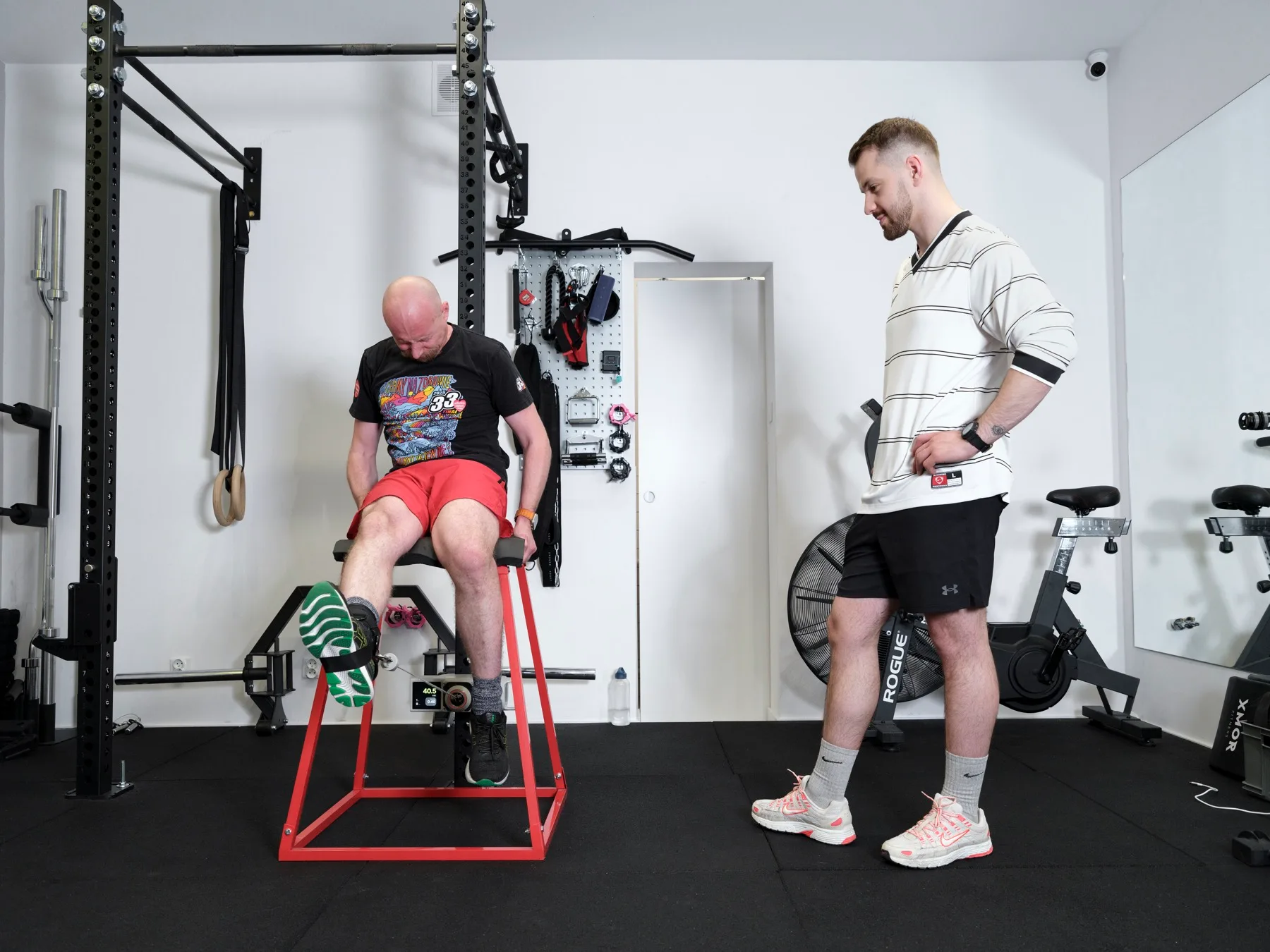
Regular measurement of progress
Every patient and athlete starts with objective tests: strength, power, asymmetry between limbs and quality of movement. We repeat them regularly, usually every few weeks, so progress shows in numbers and not only in how your knee or shoulder feels. We know whether the plan is working, when to add load and when the body is ready for the next stage, including a return to sport.
We work the same way in rehabilitation after ACL reconstruction, meniscus repair and other orthopaedic operations, with chronic pain and in athletic performance training. Test results do not replace clinical assessment; they give it hard data. We never decide on a return to running, jumping or competing based on the calendar alone.
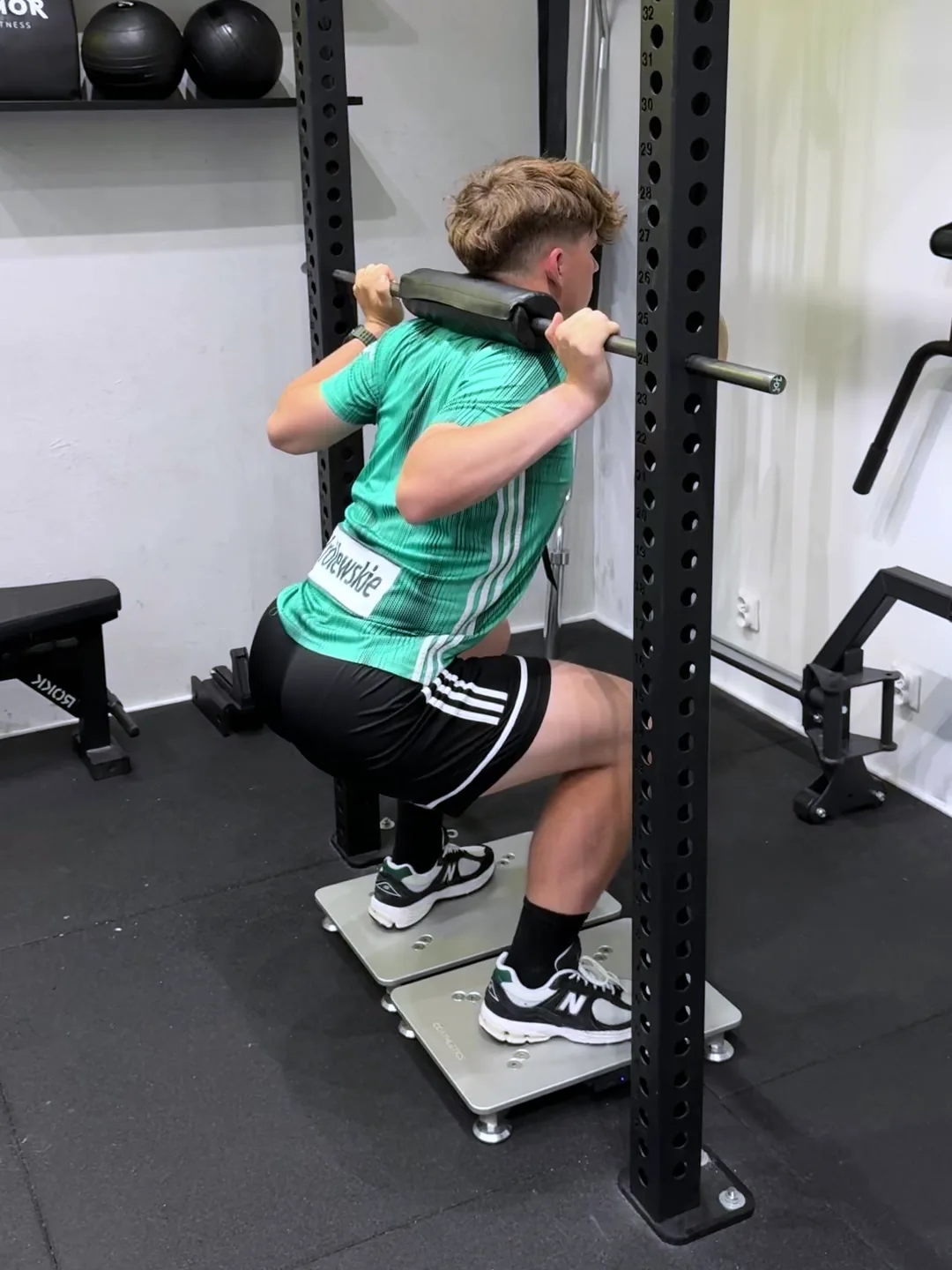
PlateMate force plates (CC Athletics)
Two plates record the force with which you push against the ground about a thousand times a second. In a few minutes we test a countermovement jump (with a dip of the legs just before take-off), a drop jump, single-leg jumps, isometric strength and landing control, and for the upper body, for example, a push-up test or an isometric shoulder test.
The result is specific numbers: jump height, maximum force, rate of force development, reaction time and, above all, the difference between the left and right side. After ACL reconstruction we compare the operated leg with the healthy one and with your earlier results, which is much more reliable than an assessment by eye. Force plate tests are one of the criteria for returning to running, jumping and sport.
Manufacturer: CC Athletics.
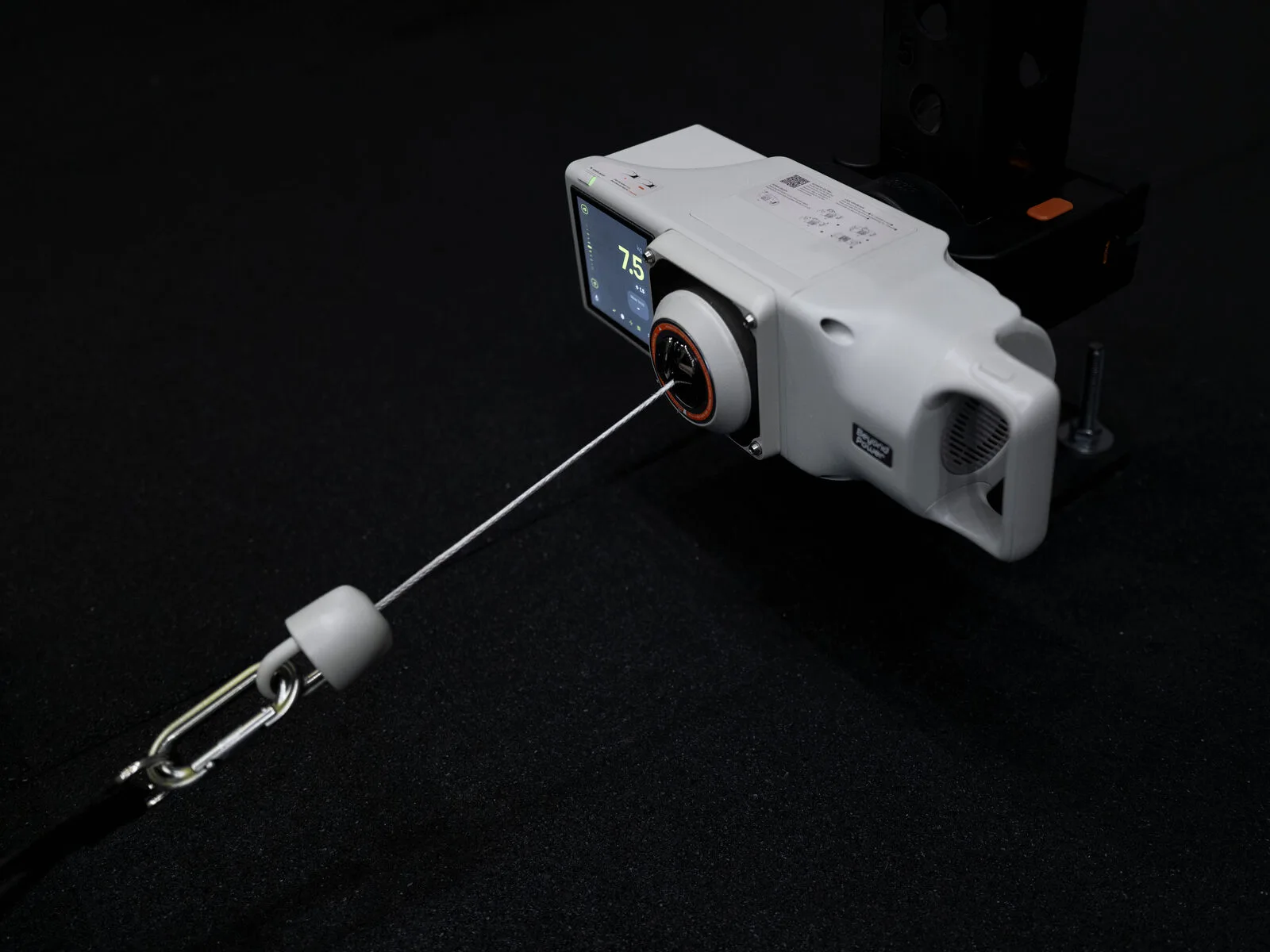
Voltra: digital cable resistance
Voltra is a compact digital resistance system. Instead of a weight stack, the resistance is generated by an electric motor and controlled continuously, with very small load increments. It works well where an ordinary stack is too crude: in the first weeks after surgery, in single-leg work and when rebuilding strength around a sensitive joint.
We use several modes: standard resistance with precise adjustment, extra load in the eccentric (lowering) phase, resistance that increases through the range of motion and speed limiting. We set the cable at any angle and any height, so we train the quadriceps, hip, calf, shoulder or trunk in positions that machines cannot reproduce. The app records the load and speed of every repetition, so we see progress set by set.
Manufacturer: Beyond Power.
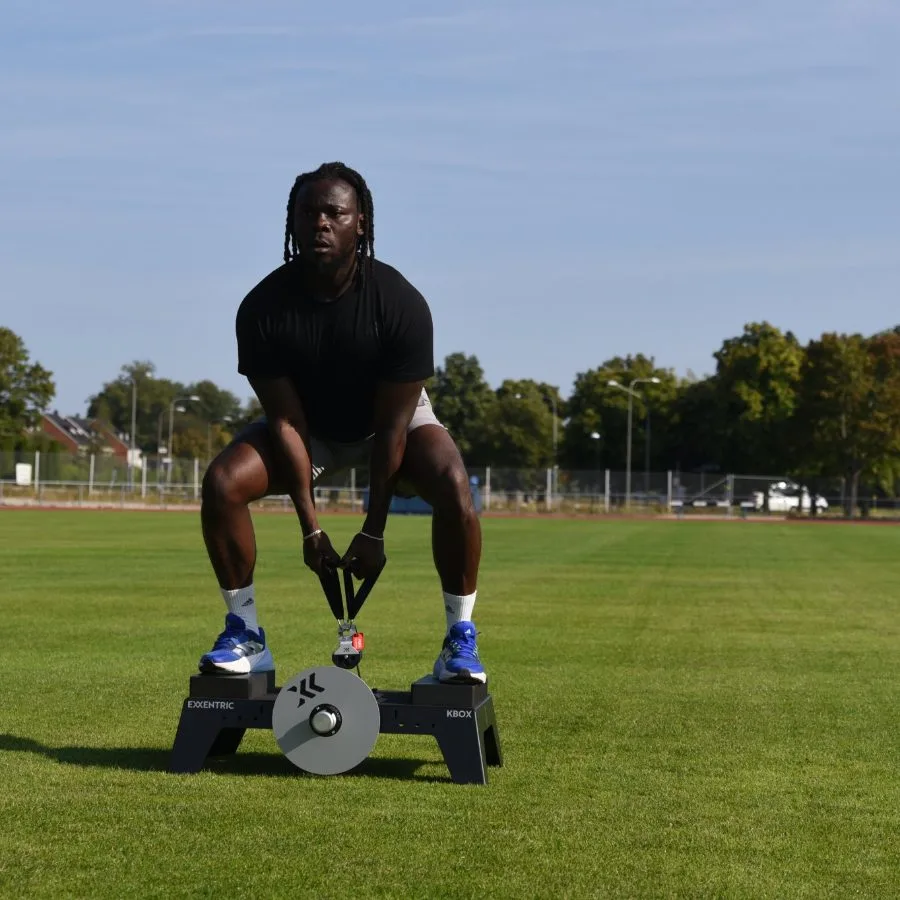
Exxentric: flywheel training
Exxentric flywheel devices use the inertia of a rotating disc. The harder you push in the concentric phase, the harder the disc resists on the way back. This makes it possible to load the eccentric phase, which builds tendon and muscle tolerance to load well, without a weight stack. We use it in the rehabilitation of tendinopathy (Achilles tendon, patellar tendon), in later stages after ACL reconstruction and after hamstring injuries, and in injury prevention for athletes. We adjust the intensity with the inertia setting and the effort, so the load can be increased gradually.
Manufacturer: Exxentric.
Vitruve: velocity-based training
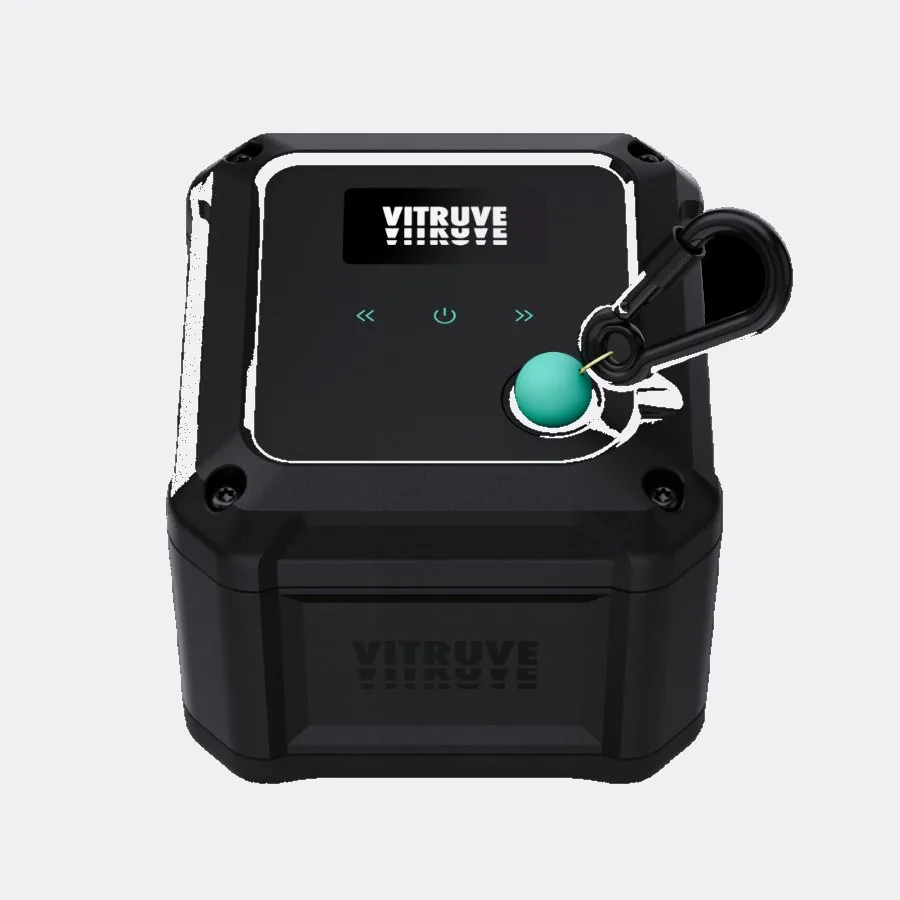
Vitruve is a small encoder attached to the barbell that measures the velocity and power of each repetition in real time. Velocity shows well how the muscles are coping on a given day. If the bar moves more slowly than usual, we reduce the weight, and if it moves faster, we can add more. You can also see the moment when fatigue starts to spoil technique, so we end the set in time. In rehabilitation and return to sport it lets us track how power returns, not just maximum strength.
Manufacturer: Vitruve.
Tanita MC-980: body composition analysis
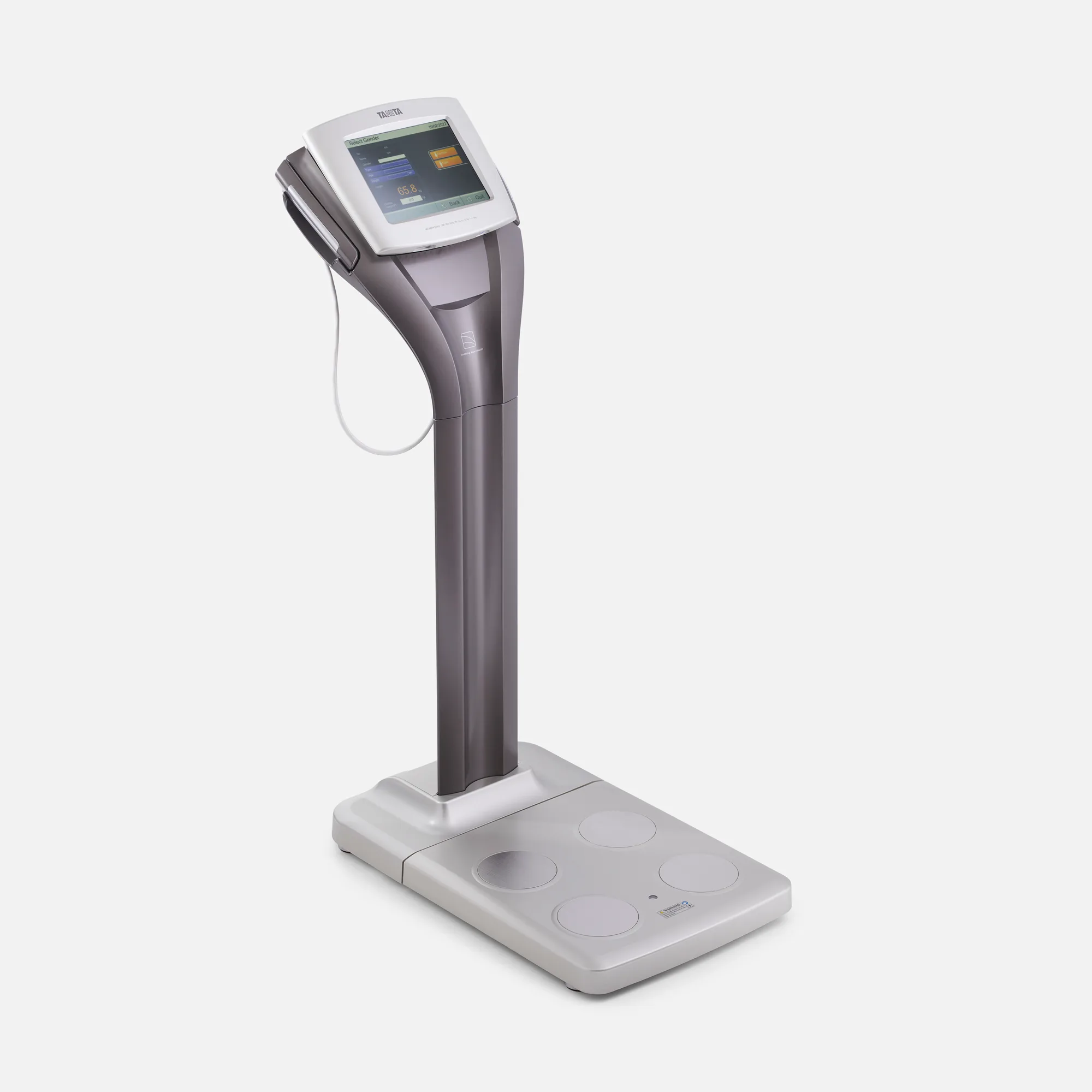
The Tanita MC-980 is a medical-grade multi-frequency bioimpedance analyser. In about a minute it estimates body fat, muscle mass separately in the arms, legs and trunk, visceral fat and body water. After surgery or immobilisation it shows how much muscle has been lost on the operated side and how it is coming back. It is also the basis of the dietitian consultation, where we plan nutrition on real data.
For a reliable result we ask you to follow a few simple rules (hydration, no intense exercise before the measurement). We do not carry out the measurement for people with a pacemaker or other implanted electronic devices, so please let us know in advance.
Manufacturer: Tanita.
Which equipment in which situation
- After ACL reconstruction: jump and strength tests on the plates, Voltra and flywheel for loading, Tanita for tracking muscle mass.
- Tendon problems (Achilles, patellar, shoulder): flywheel and Voltra for progressive loading, plates for checking strength.
- Athletes and return to sport: plates, Vitruve and Voltra, with tests repeated before each stage.
- Nutrition and body composition: Tanita MC-980 with a dietitian consultation.
Everything in one place, in Praga-Południe at ul. Zamoyskiego 49, one-to-one with a physiotherapist.
Frequently asked questions
Where in Warsaw can I have a force plate strength test?
At Studio Wycisk, ul. Zamoyskiego 49 in Praga-Południe. The test costs 495 zł, takes about an hour and includes a report with an analysis of the results and specific recommendations.
Do I need to be a professional athlete to use this equipment?
No. We use it with patients after operations and injuries, people with chronic pain and amateur athletes. We always choose the load and tests to suit your stage and goal.
Is training on this equipment safe after surgery?
Yes. We dose the load according to the stage of healing and your surgeon’s recommendations. Digital resistance and the flywheel allow very small steps of progression.
How much does body composition analysis cost?
A dietitian consultation with body composition analysis on the Tanita costs 240 zł.
Book your first visit
An hour for an interview, a functional assessment and a plan of work. You can book via Booksy or by phone.