Home / Shoulder Rehabilitation
Shoulder rehabilitation Warsaw
Does shoulder pain keep coming back despite massages and treatments? We start with a diagnosis and measurements of strength and range of motion, and finish when you are back to full fitness and no longer have to worry about the pain returning.
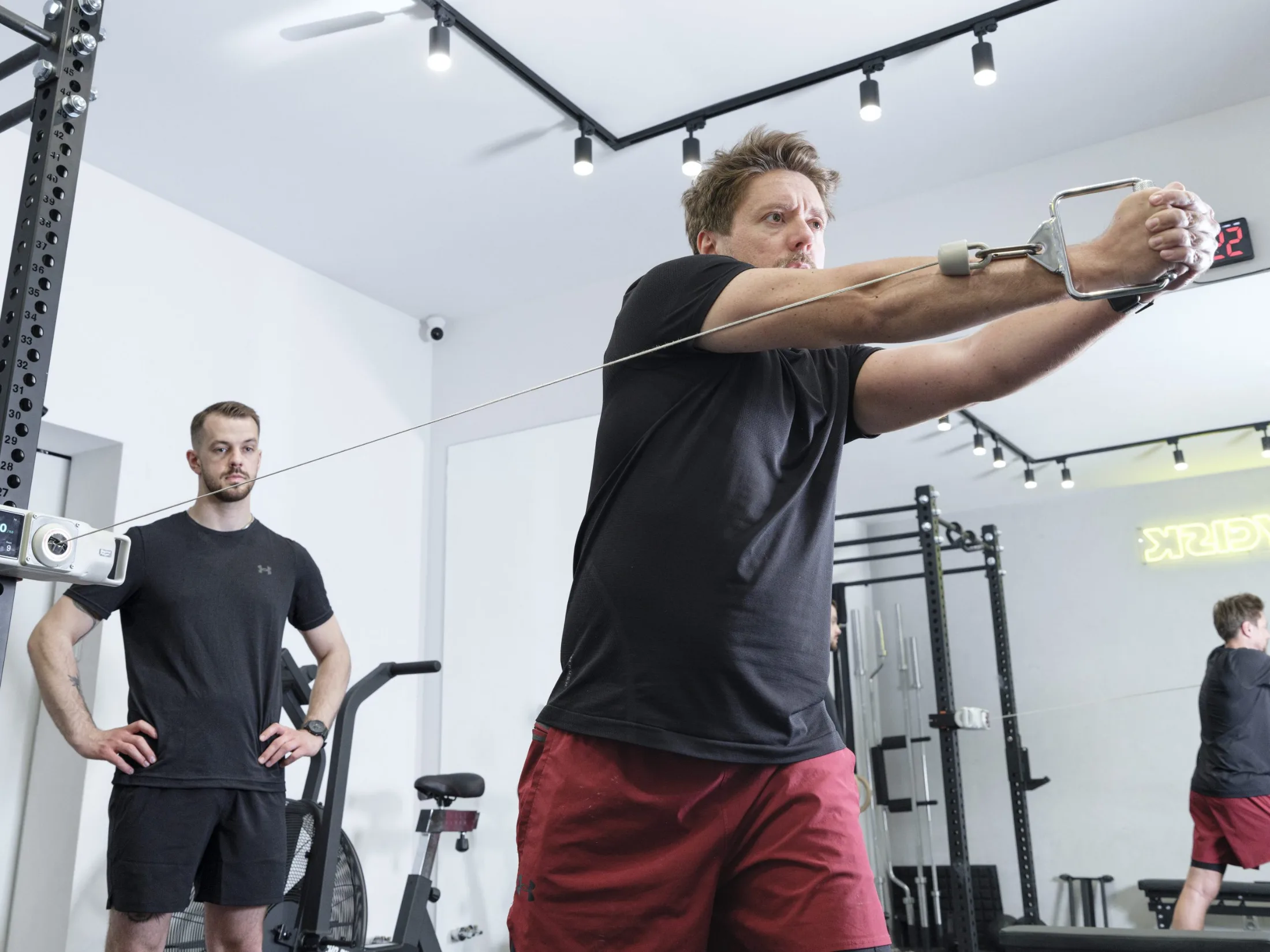
What patients come with
When to start shoulder rehabilitation
After surgery
After arthroscopy, stabilisation or rotator cuff repair. We work according to the clinic protocol.
After an injury
After a dislocation, a fall onto the shoulder or with joint instability. We rebuild the strength and control of the shoulder.
With pain and overload
With subacromial impingement, bursitis, rotator cuff tendinopathy or frozen shoulder. We teach the shoulder to tolerate load again.
What a visit looks like
What shoulder rehabilitation looks like
- STEP 01
Diagnosis
An interview and an assessment of shoulder mobility and strength. We compare the result with your healthy shoulder.
- STEP 02
Individual plan
We set goals and choose exercises for your stage of rehabilitation, your work and your sport. We adjust the plan as we go, depending on how your shoulder responds.
- STEP 03
Regular sessions
Therapeutic exercise that gets harder as the pain decreases. This is how you regain function.
- STEP 04
Progress measurements
Every few weeks we repeat the strength and range of motion tests, so you can see the results of your work in numbers.
Reviews
What patients say after shoulder rehabilitation
+30% siła w ramionach, brak bólu w barku i moja subiektywna opinia, że w końcu jest z barkiem ok.
Ja szukałem osoby, która mi pomoże z wyjściem z zapalania kaletki w barku i pomoże bezpiecznie wejść w świat ćwiczeń siłowych. Na pierwszym spotkaniu Jerzy jasno określił nad czym pracujemy i jak zmierzymy progres, potem było 6 treningów, i na koniec mierzyliśmy progres.
Grzegorz Pawluk★★★★★
Bursitis in the shoulder
Już po kilku spotkaniach widziałam realną poprawę, a warto wspomnieć, że wcześniej rehabilitowałam się 3 miesiące bez zadowalającego efektu.
Trafiłam do Jurka w październiku z kontuzją obu barków. Po 5 spotkaniach z Jurkiem mogę wrócić do crossfitu, a to dzięki idealnie dobranym ćwiczeniom. Jestem bardzo zadowolona!
Dominika Banaszek★★★★★
Injury to both shoulders
See all reviews on Google and Booksy (150+ reviews, average 5.0)
Price
How much does shoulder rehabilitation cost
240 PLN
In a package of 4 visits
960 PLN per package. Good for overload and after an injury, when you need several weeks of regular work. Includes a body composition analysis worth 240 PLN.
220 PLN
In a package of 8 visits
1,760 PLN per package. Includes force plate tests and a body composition analysis worth 735 PLN in total.
Studio
Shoulder rehabilitation in Praga-Południe
The studio is at Zamoyskiego 49, with the entrance from the Grochowska side. From Warszawa Wschodnia station it is about a 5-minute walk. Parking is about 50 m from the studio.
The same physiotherapist guides you from therapeutic exercise all the way to full loads.
Show on map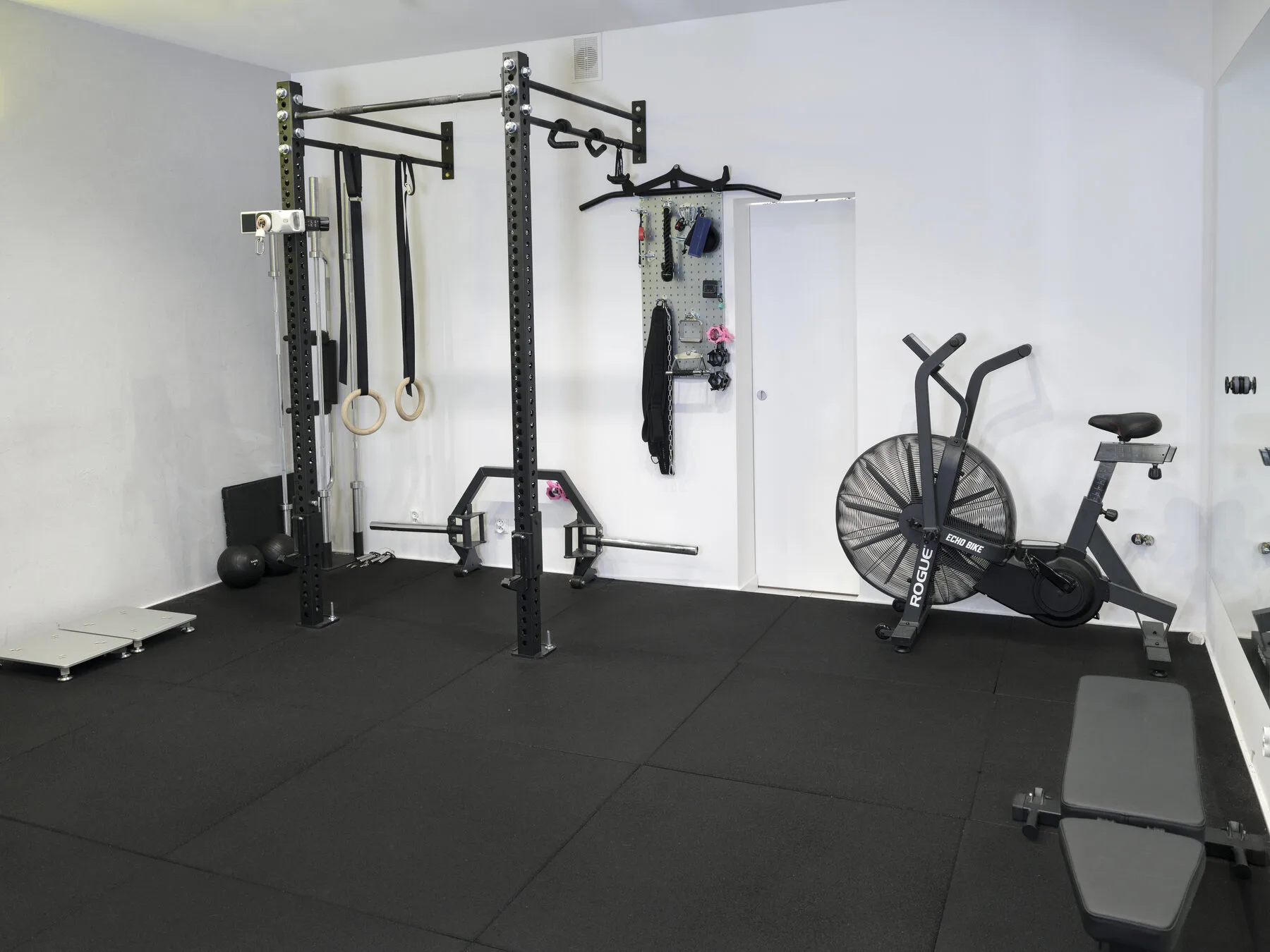
FAQ
Frequently asked questions about shoulder rehabilitation
We have collected the questions we hear from patients most often.
What does the first rehabilitation visit look like?
We start with an interview and a review of your records, then check the mobility and strength of the shoulder. At the end we explain where the symptoms come from and show the first exercises. You leave with an action plan and a programme to do at home. Bring comfortable sportswear.
How much does shoulder rehabilitation cost?
Visits can be paid for singly or in packages:
- single visit (60 min): 260 PLN;
- package of 4 visits: 960 PLN (240 PLN per session);
- package of 8 visits: 1,760 PLN (220 PLN per session).
The 8-visit package also includes force plate tests and a body composition analysis worth 495 PLN in total.
How long does shoulder rehabilitation take?
It depends on the type of problem. After a recent overload, improvement often appears after a few weeks. After stabilisation surgery or rotator cuff reconstruction, a return to full loads usually takes several months, and a frozen shoulder can need even more patience. We discuss an approximate time after the first consultation.
Do I need a referral for shoulder rehabilitation?
No. We see patients privately only, so no referral is required. If you have imaging reports or recommendations from an orthopaedist or a rehabilitation doctor, bring them with you, as they make it easier for us to assess your situation.
What methods do you use in shoulder rehabilitation?
Shoulder physiotherapy in our Warsaw studio is based on exercise therapy: strengthening, mobilising (improving range of motion) and stabilising exercises, work on scapular control and gradually increasing load. Education is just as important: we explain what is happening with the shoulder and how to load it safely. We do not use kinesiotaping, dry needling or devices such as shock wave, TECAR therapy or high-energy laser.
How is a calcific shoulder rehabilitated?
The doctor decides on treating the calcium deposits themselves. Our role is the return to function: once acute pain eases, we rebuild the range of motion and strength lost during weeks of sparing the arm. We work at a pace that does not provoke a return of symptoms.
How can I speed up shoulder recovery?
After an injury, well-led shoulder rehabilitation speeds up the return to function, because tissues rebuild their capacity faster when, instead of long rest, they get movement in a dose they can tolerate. Regularity gives the most: exercises from the home programme done as planned, sensible dosing of load and enough sleep. It also helps to understand which pain is acceptable and which means you need to slow down. Passive treatments rarely speed up the return to full function.
How is a frozen shoulder treated?
In the painful phase we avoid forceful stretching and choose movements the shoulder tolerates. When the pain eases and stiffness dominates, we gradually increase range and strengthen the muscles. If mobility does not return despite exercise, the doctor decides on any procedure. After it we deliver rehabilitation according to their recommendations.
Does every patient with shoulder pain need an ultrasound before starting rehabilitation?
Not always. In many cases the physiotherapist can safely start therapy based on a clinical examination. When we suspect a complete tendon rupture or serious joint damage, we refer you for an orthopaedic consultation and imaging: shoulder ultrasound, X-ray or MRI, which you can have done at many diagnostic centres in Warsaw. We do not perform imaging ourselves, but we always take its report into account in the plan. The result then helps to choose the next steps.
Do rehabilitation exercises hurt?
Exercises can cause slight discomfort, but should not aggravate symptoms for long. Mild soreness during effort that settles by the next day is acceptable. Strong or growing pain is a signal to change the load or the choice of exercises.
Read more about how we work
Shoulder physiotherapy: how we work
Basic principles of shoulder rehabilitation
Simply rubbing the sore spot, like a classic shoulder massage, does not remove the cause of the problem. Well-led shoulder physiotherapy brings lasting improvement when the shoulder joint regains the strength and load tolerance your daily life demands. The shoulder girdle is several joints working together: the glenohumeral joint, the acromioclavicular joint, the sternoclavicular joint and the scapulothoracic joint, the connection of the shoulder blade with the rib cage. The glenohumeral joint has the greatest range of motion in the body, but pays for it with stability. The head of the humerus sits in a shallow socket held by the joint capsule, ligaments, the labrum and the rotator cuff muscles, so when any of these weakens, the whole arm feels it.
In our experience, for most shoulder dysfunctions passive treatments give at best temporary relief. Tissues adapt only under properly dosed movement. Tendons and muscles under sensible load become stronger and tolerate effort better. That is why we do not use therapeutic massage, manual therapy or physical therapy modalities. We teach you how to load the shoulder and explain what is happening in your body, so that once therapy ends you do not have to go back to square one.
Sources of shoulder pain and injury
The most common causes patients come to us with are:
- overload, for example when you suddenly start training more or working with your hands overhead;
- injury: a fall onto an outstretched arm or directly onto the shoulder (a common cause of acromioclavicular joint damage), a jerk or a dislocation;
- weaker muscles after several weeks of sparing the arm, for example after surgery;
- tendon changes that appear with age, and calcium deposits;
- conditions such as diabetes, which raise the risk of frozen shoulder.
In consultations we often hear that the problem came out of nowhere. Usually, though, you can point to a moment when the shoulder started doing more than usual, for example after a change of training plan or of duties at work. When symptoms suggest serious damage, we say plainly that an orthopaedist should assess it first, and we return to rehabilitation after the diagnosis.
When should you come for therapy?
It is worth coming when your shoulder wakes you at night, does not let you raise your arm overhead or hurts with every attempt to return to the gym. Night pain and muscle tension usually ease as shoulder physiotherapy rebuilds muscle strength and the joint’s tolerance to load. We deliver orthopaedic rehabilitation both after and before surgery. Pre-surgery rehabilitation improves strength and range of motion, which makes the start after the operation easier, and exercises learned earlier are useful from the first days.
After shoulder stabilisation surgery
Stabilisation is most often done after recurrent dislocations, frequently during shoulder arthroscopy. The shoulder surgeon repairs the labrum (for example with the Bankart method) or transfers a piece of bone to enlarge the socket (the Latarjet procedure). The operation restores mechanical stability, and a brace in the first weeks protects the shoulder joint and the healing tissues. Once it comes off, however, the muscles are weak and the arm is stiff. Post-operative rehabilitation follows a clinic protocol: first we regain range of motion, then build the strength of the rotator cuff and scapular muscles. At the end we practise movements from your sport: a throw, a pull-up or a grip on the mat.
Rotator cuff tendon injuries
The rotator cuff is made up of four muscles whose tendons wrap around the head of the humerus and hold it in the socket:
- supraspinatus,
- infraspinatus,
- teres minor,
- subscapularis.
Rotator cuff damage can happen in an injury or gradually, under overload. Typical symptoms are pain when lifting the arm to the side, weakness and trouble sleeping on the affected side. Many partial tears respond well to sensibly dosed strengthening exercises, even without surgery, if the treating doctor decides so.
Shoulder dislocation
In a dislocation the head of the humerus comes out of the socket, most often forward. After reduction the acute pain passes quickly, but the stretched capsule and damaged labrum remain. In young, active people instability of the shoulder easily develops and the shoulder dislocates again. Post-injury rehabilitation relies on stabilising and strengthening exercises that rebuild the strength and control of the shoulder girdle muscles (the rotator cuff and scapular muscles) and protect the joint from further overload. They decide whether you return to the mat confident in your movement or afraid of every swing.
Subacromial bursitis
The bursa is a small fluid-filled sac that reduces friction between the tendons and the acromion. When irritated it hurts when you raise your arm to the side, reach into a back pocket and sleep on the affected shoulder. Inflammation of the subdeltoid bursa, which often joins the subacromial one, gives very similar symptoms. It is rarely an isolated problem and is usually accompanied by rotator cuff overload. First we limit the movements that aggravate symptoms, then we gradually teach the shoulder to tolerate them again. As part of education we also suggest how to position the arm for sleep and what to change at your desk, to reduce night pain and shoulder overload in the most painful period.
Subacromial impingement syndrome
This is pain at the front and side of the shoulder that worsens when raising the arm, also called subacromial impingement or shoulder impingement. It used to be explained by tendons rubbing against bone and treated with surgery that widened the space under the acromion. Studies comparing such surgery with exercise, however, showed similar results. That is why in most cases we start with exercise:
- we briefly limit movements that clearly aggravate the pain;
- we strengthen the rotator cuff and improve scapular biomechanics, meaning the way the shoulder blade moves when the arm is raised;
- we gradually return to working with the arm raised overhead.
Frozen shoulder
Adhesive capsulitis, also called frozen shoulder syndrome, starts with strong, often night-time pain and turns into marked stiffness. The problem affects mainly people between 40 and 60, more often women and people with diabetes. Symptoms usually fade with time, though they do not always disappear completely. We restore mobility and strength gradually, without forceful stretching, which in the painful phase only makes things worse. If the doctor decides on a procedure, such as arthroscopic capsular release, we continue rehabilitation according to their recommendations.
Rotator cuff tendinopathy
Tendinopathy is tendon overload accompanied by pain and reduced tolerance to effort. It often appears after a sudden rise in load, for example when overhead exercises are added to the plan or when you work for long with your hands above shoulder level. Tendons do not like jumps in load, but immobility does not serve them either. The aim of shoulder rehabilitation is therefore not only to calm the pain but to remove the causes of rotator cuff overload: most often weaker muscles, disturbed scapular movement or too fast a rise in load. We progress from isometric exercises (tensing the muscle without moving the arm) to full, dynamic movements.
Clicking and snapping in the joint
Crunching when you circle your arm worries many patients. Yet painless sounds are very common, also in fully fit people, and need no treatment. We always explain where they come from, because fear of them can limit you more than the sounds themselves.
It is different when the clicking comes with pain or weakness. Then we look for the cause, which can be, for example, an irritated biceps tendon. For disorders of the long head of the biceps, shoulder rehabilitation means gradually getting the tendon used to load, as with other tendinopathies.
Calcific tendinopathy
Calcium deposits settle most often in the supraspinatus tendon. They can be symptom-free and turn up by chance on an X-ray, but they can also cause acute pain, especially when the body starts to absorb them. The doctor decides on treating the deposits themselves. If they recommend a shoulder injection, meaning a shot that reduces pain and inflammation, that is a good moment to start active rehabilitation: the shoulder is then less irritable and takes exercise better. Once the severe symptoms settle, we rebuild the strength lost during weeks of sparing the arm.
Stages of the recovery process
Every collaboration goes through the same stages, but we adapt the pace and choice of exercises to the individual. We check progress with numbers, not with feelings alone.
Initial assessment
We start the first meeting with a conversation: when the shoulder started to hurt, what aggravates the symptoms, what your work and training look like. Then we carry out a functional assessment and check:
- shoulder joint mobility;
- the strength of individual muscle groups and differences between sides;
- positions and movements in which pain appears;
- medical records, if you have them: an MRI or ultrasound report or a hospital discharge summary.
When a result raises doubts, we say plainly that an orthopaedic consultation or imaging is needed.
Individual rehabilitation plan
The plan comes from the assessment results, the stage of tissue healing and your goal. For one person the goal is putting on a jacket without pain, for another a return to overhead barbell pressing. We break each goal into concrete checkpoints, so it is clear when we move on.
Regular rehabilitation sessions
The basis of our work is exercise therapy. We teach you to tense muscles at the right moment and gradually increase the difficulty of tasks. We start with simple movements in an unloaded position and, as you progress, move on to work with dumbbells and resistance bands and, when your goal requires it, a barbell too.
Independent work at home
Tissues need frequent stimulus, so visits alone are not enough. You get a home programme that needs minimal equipment and takes a dozen or so minutes a day. At visits we refine technique and explain what level of pain during effort is acceptable. Patients who understand their problem fear movement less and return to form faster.
Muscle strength tests
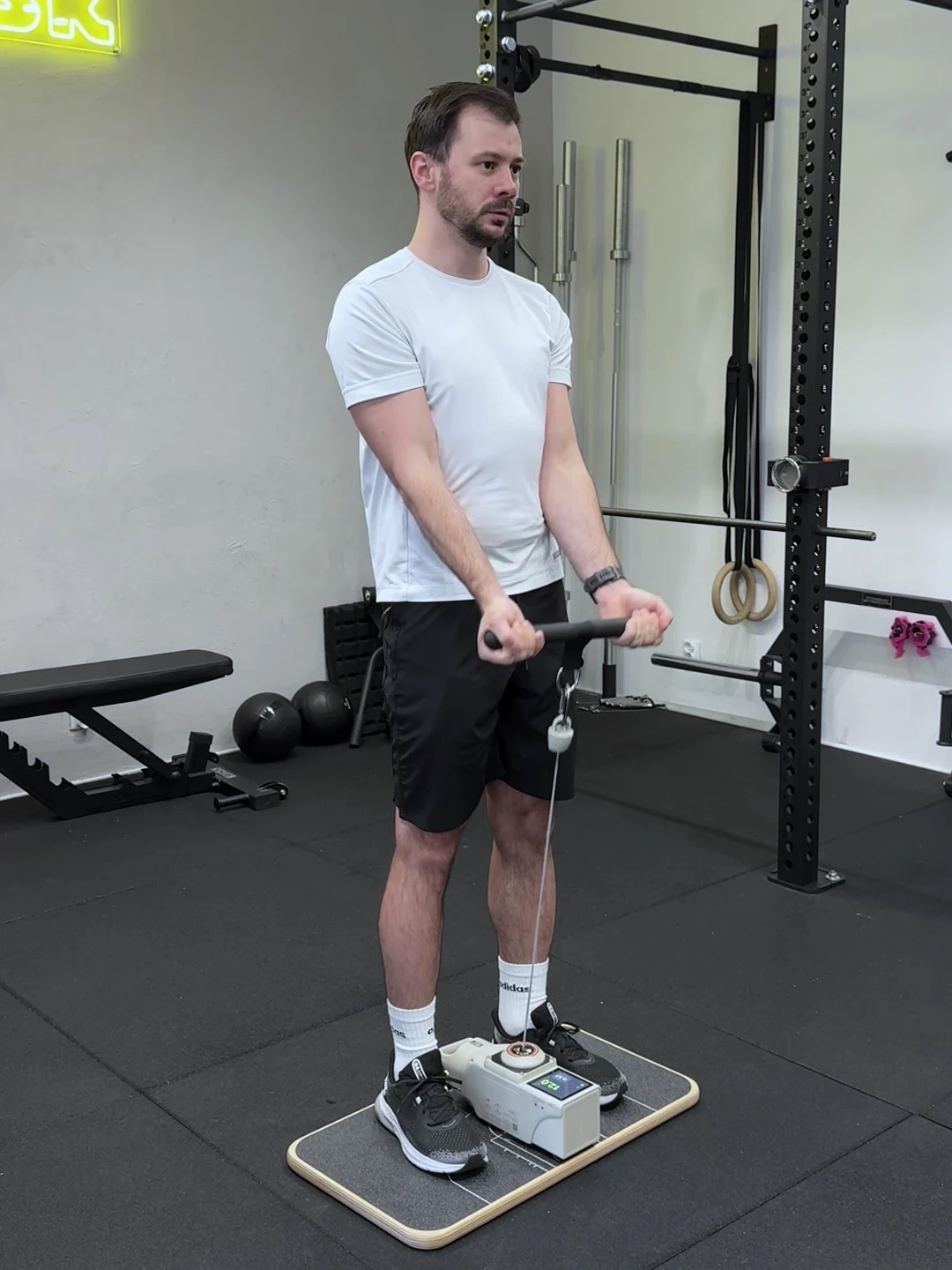
Every few weeks we compare results with the starting point: how high you raise your arm, how strong it is and which activities no longer hurt. We also measure strength in isometric tests on PlateMate CC Athletics force plates. They record force almost a thousand times per second and show the result in concrete numbers. When progress slows we change the exercises or load, and when it is faster than we assumed, we speed up.
Exercise-based shoulder rehabilitation: Warsaw, Praga-Południe
Wycisk Physiotherapy and Training is a private physiotherapy and training centre in Warsaw where we deliver shoulder rehabilitation, among other services. We are at Zamoyskiego 49, with the entrance from the Grochowska side. From Warszawa Wschodnia station it is about a 5-minute walk, and you can park by the studio. We are easy to reach from Grochów, Saska Kępa or Kamionek, and thanks to the nearby station also from more distant districts of Warsaw.
Our team is made up of physiotherapists who also work as personal trainers. This combination is most visible at the end of rehabilitation: when the shoulder stops hurting but is not yet ready for an ordinary gym, we help you move smoothly from therapeutic exercise to full loads. This reduces the risk of the pain returning on the first heavier set.
We work with your treating orthopaedist: we follow their recommendations and, when something raises our doubts, we refer you for a consultation. We also treat patients after shoulder arthroscopy performed in Warsaw orthopaedic centres.
We keep expanding the knowledge this work rests on: we have completed over 1,000 hours of training with experts from Poland and abroad, including Adam Meakins, Ben Cormack and Greg Lehman. We also test it where the demands are highest: we have prepared 1 Liga footballers and medallists of the Polish Championships in combat sports. Most often, though, the people who come to us are working adults, parents and amateur athletes.
Written by Jerzy Wycisk, MSc, physiotherapist (PWZFz 78471). Updated: 5 November 2026.
Book your first visit
One hour for an interview, a functional assessment and a plan of work. We see patients at Zamoyskiego 49 in Praga-Południe.